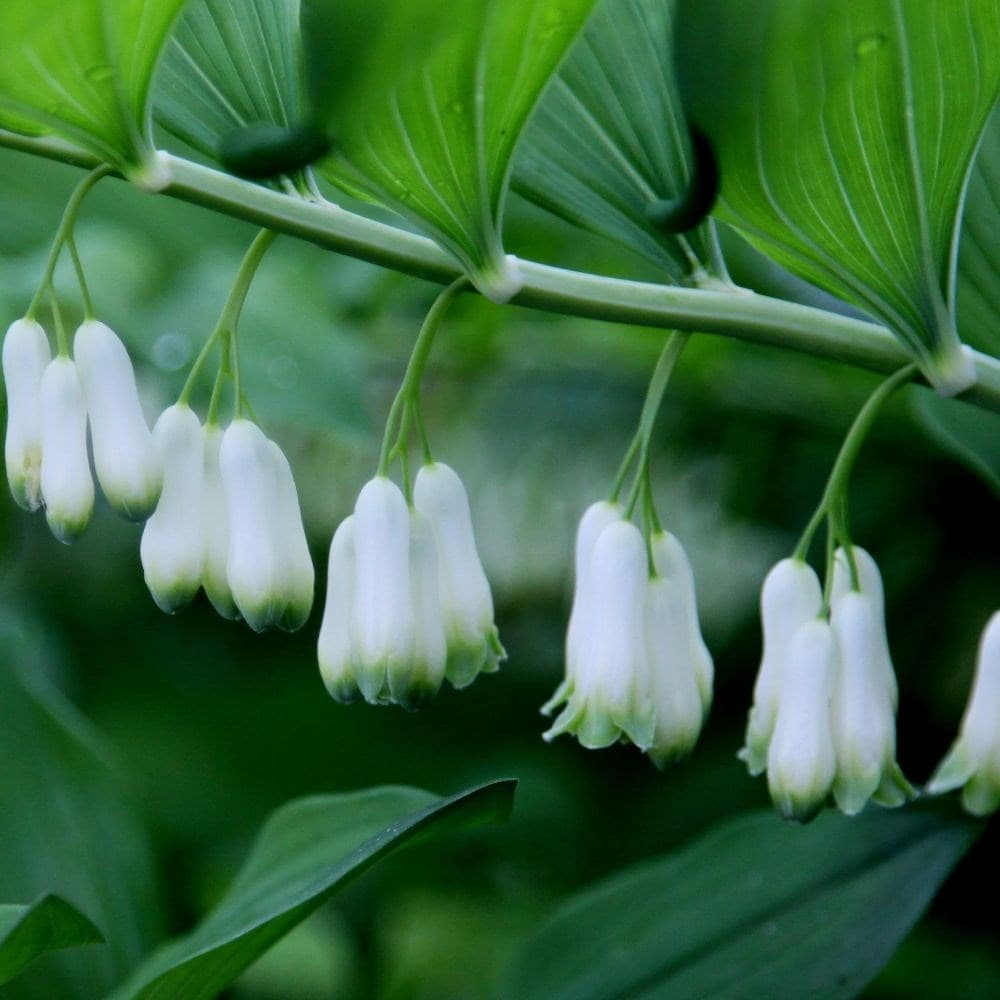
Polygonatum × hybridum
common Solomon's seal


- 9cm pot
- £8.99
- In stock (shipped within 3-5 working days)
- 3 × 9cm pots
- £24.00 £26.97
- In stock (shipped within 3-5 working days)
- 6 × 9cm pots
- £39.99 £53.94
- In stock (shipped within 3-5 working days)
- 2 litre pot
- £18.99
- available to order from late spring
Delivery options
- Standard £5.95
- Position: partial shade
- Soil: fertile, humus-rich, moist, well-drained soil
- Rate of growth: average to fast
- Flowering period: May to June
- Hardiness: fully hardy
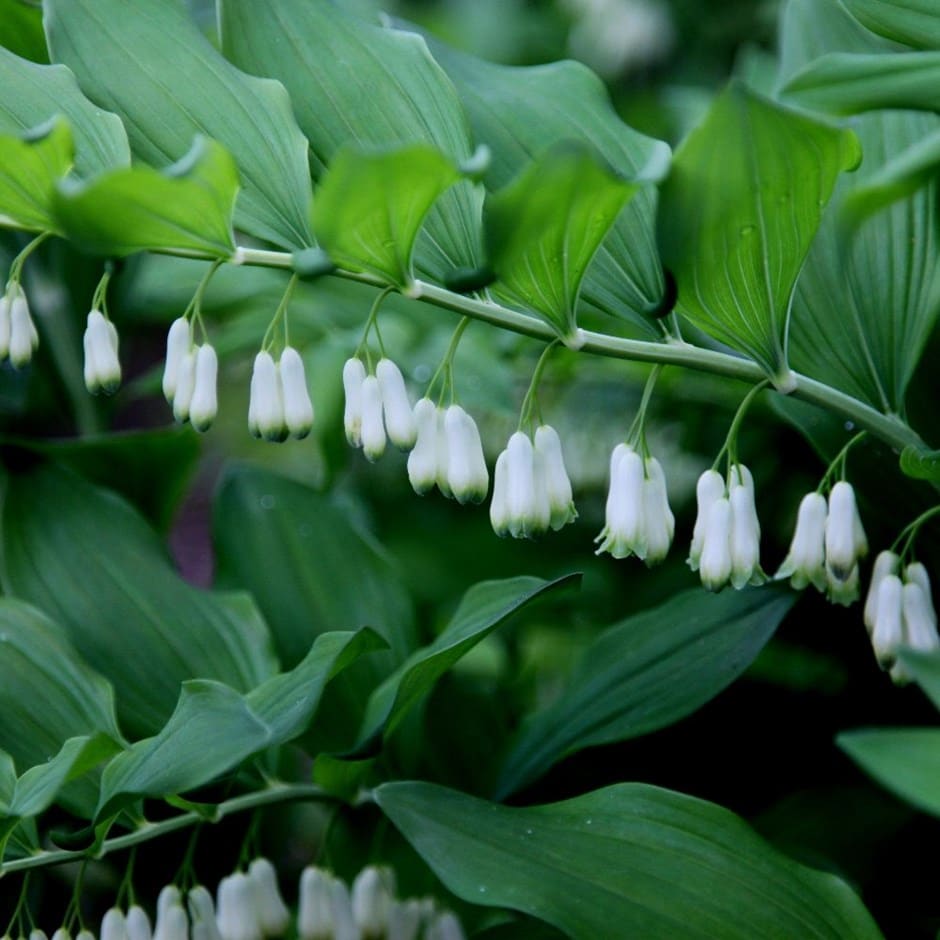
The graceful, arching stems that are clothed in large, dark green, slightly pleated leaves, which each have waxy-blue undersides, are enough to earn this plant its place in the garden. But in early summer, when the stems are strung with clusters of green-tipped, white flowers that hang like little bells, it is simply gorgeous. The flowers are followed by small, black fruit. Solomon's Seal prefers a cool position in a shady spot and looks wonderful in a woodland setting among shade-loving ferns. - Garden care: Polygonatum do not like dry soil. Cut the plant down to the ground in autumn. Lift and divide large colonies in early spring, taking care not to damage the young shoots. Apply a mulch of well-rotted leafmould or garden compost in spring.
- Pets: TOXIC if eaten; Humans: Harmful if eaten