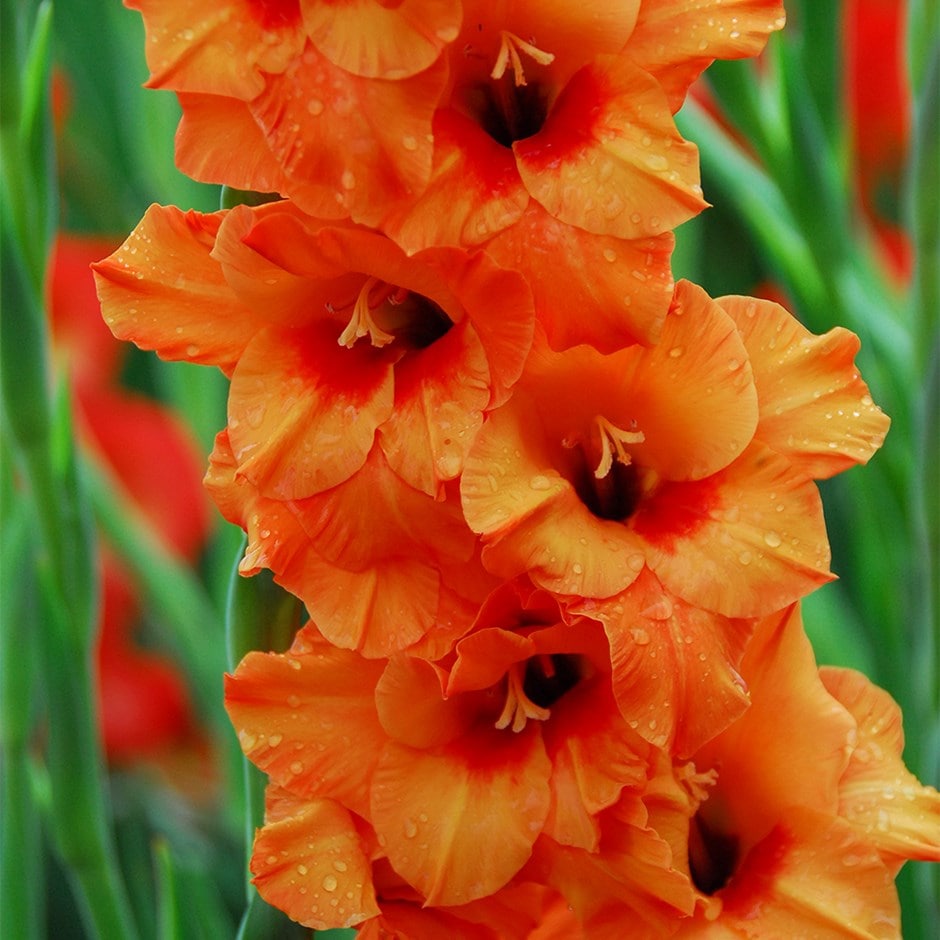
Gladiolus 'Prince of Orange'
gladioli or sword lily

- 15 × bulbs
- £6.99 £0.47 each
- Delivered by early February
- 45 × bulbs
- £18.00 £0.40 each
- Delivered by early February
Delivery options
- Bulbs (only) £4.99
- Position: full sun
- Soil: moderately fertile, moist but well-drained soil
- Rate of growth: average
- Flowering period: July to September
- Hardiness: half hardy (will need winter protection)
- Bulb size: 10/12
A vibrant, show-stopping cultivated variety prized for its glowing tangerine-orange blooms that intensify to deeper shades toward the throat. The tall, upright flower spikes are densely lined with large, ruffled florets, creating a bold vertical accent in mid-to-late summer borders. Its rich, sunset tones make Gladioli ‘Prince of Orange’ especially effective in warm-coloured planting schemes or as a focal point in cut-flower arrangements.
Plant corms 10-15cm (4-6in) deep and 25cm (10in) apart on a bed of sharp sand to aid drainage. In frost-prone areas, lift them when the leaves turn yellow-brown and store the corms in a dry, frost-free place over winter.
Gladioli grow best in full sun and well-drained soil, with protection from strong winds. Once planted, water regularly during dry spells and support taller plants with canes if needed. Feed every couple of weeks with a high potash fertiliser as the flower spikes develop. Deadhead spent blooms to encourage more flowers further down the stem.
After flowering, allow the foliage to die back naturally so the corms can store energy for the next season. In milder areas, corms can be left in the ground with a dry mulch for winter; otherwise, lift and store them in a frost-free place.
Gladioli grow best in full sun and well-drained soil, with protection from strong winds. Once planted, water regularly during dry spells and support taller plants with canes if needed. Feed every couple of weeks with a high potash fertiliser as the flower spikes develop. Deadhead spent blooms to encourage more flowers further down the stem.
After flowering, allow the foliage to die back naturally so the corms can store energy for the next season. In milder areas, corms can be left in the ground with a dry mulch for winter; otherwise, lift and store them in a frost-free place.