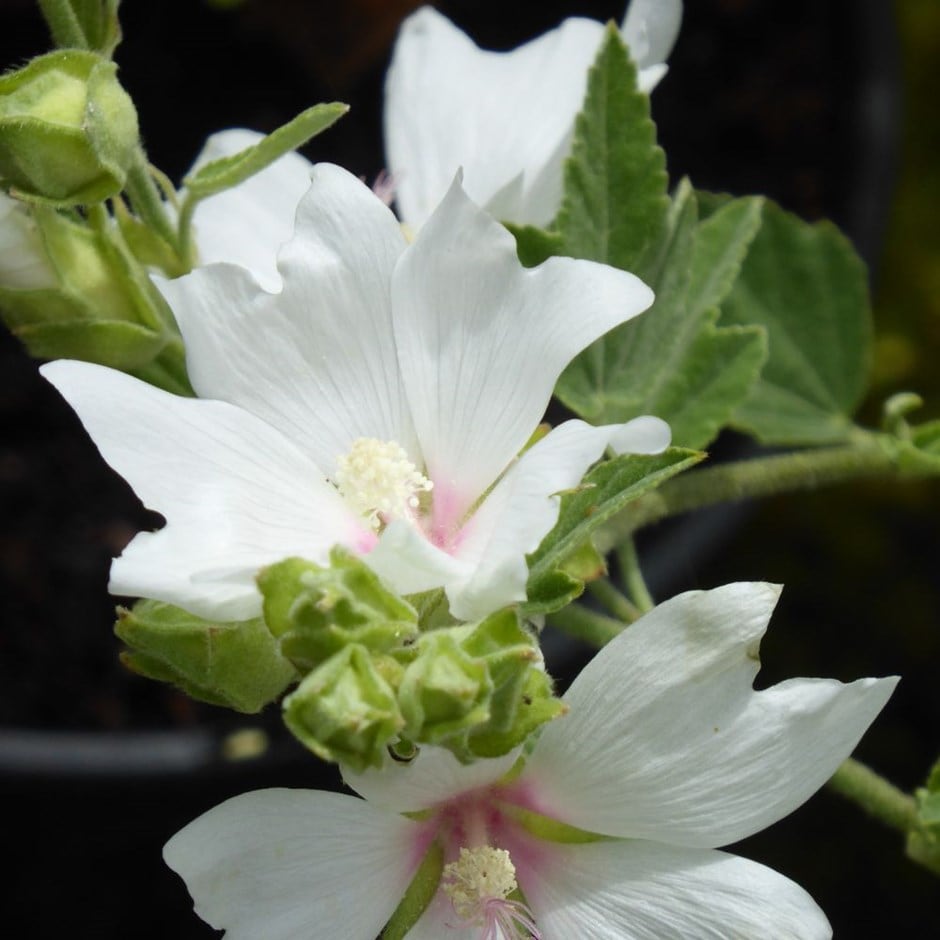
Malva × clementii 'Barnsley Baby'
mallow (syn. Lavatera)

- 2 litre pot
- £21.99
- In stock (shipped within 2-3 working days)
Delivery options
- Standard £5.99
- Position: full sun
- Soil: light, moderately fertile, well-drained soil
- Rate of growth: fast
- Flowering period: June to September
- Hardiness: fully hardy
As the name suggests, this is a compact version of the cottage garden favourite. It shares all the sought after qualities of the original, and will produce lashings of flowers over an extended period from early summer. Initially the blooms are mainly white, but as they age, they turn pinker, and their eye develops a deeper reddish colouring.
Malva × clementii 'Barnsley Baby' is extremely undemanding and easy to grow, and its more diminutive stature makes it perfect for patio pots - or quickly filling gaps in a sunny border.
Malva × clementii 'Barnsley Baby' is extremely undemanding and easy to grow, and its more diminutive stature makes it perfect for patio pots - or quickly filling gaps in a sunny border.
Plant Malva in a sunny position with well-drained, moderately fertile soil, adding organic matter at planting time for best results. Space plants around 45cm (18in) apart to improve air circulation and reduce the risk of mildew.
Water regularly until established, then only during prolonged dry spells, as mature plants become drought-tolerant. Apply a balanced fertiliser in spring to support growth and flowering, but avoid excessive nitrogen, which can encourage more leaves than blooms.
Keep an eye out for rust and powdery mildew, removing affected leaves and ensuring good airflow to prevent disease.
In exposed areas, tall stems may need staking to prevent wind damage. Deadhead spent flowers regularly to prolong blooming and reduce self-seeding unless seedlings are desired. After flowering, cut back to within 30cm (12in) of the ground in spring once frosts have passed, and mulch with well-rotted compost or manure to retain moisture and improve soil structure.
In windy sites, shortening stems by half in autumn helps minimise the risk of damage.
Water regularly until established, then only during prolonged dry spells, as mature plants become drought-tolerant. Apply a balanced fertiliser in spring to support growth and flowering, but avoid excessive nitrogen, which can encourage more leaves than blooms.
Keep an eye out for rust and powdery mildew, removing affected leaves and ensuring good airflow to prevent disease.
In exposed areas, tall stems may need staking to prevent wind damage. Deadhead spent flowers regularly to prolong blooming and reduce self-seeding unless seedlings are desired. After flowering, cut back to within 30cm (12in) of the ground in spring once frosts have passed, and mulch with well-rotted compost or manure to retain moisture and improve soil structure.
In windy sites, shortening stems by half in autumn helps minimise the risk of damage.