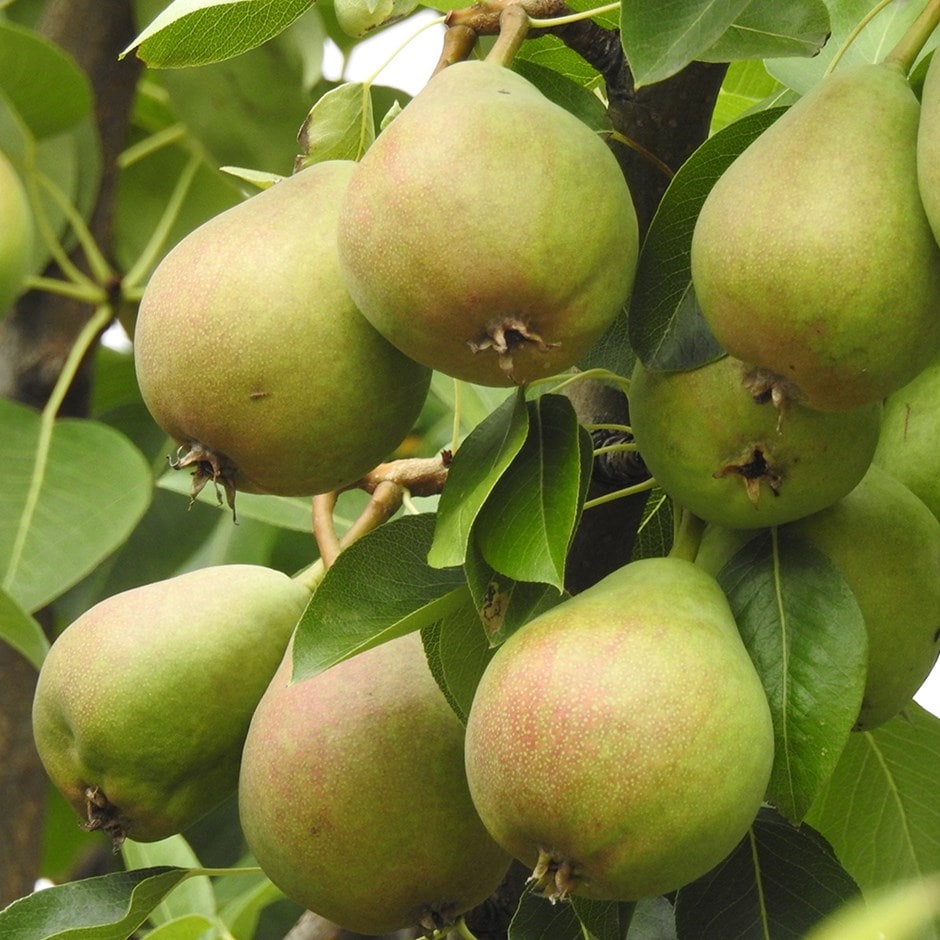


pear 'Onward'
pear 'Onward'

- 9 litre pot | QA root stock | 1.8 - 2m
- £49.99
- In stock (delivery within 3-4 working days)
- 12 litre pot | QA root stock | 1m
- £149.99
- In stock (delivery within 3-4 working days)
- bare root | QA root stock | 1.2m
- £14.00 £34.99
- available to order from late spring
Delivery options
- Standard £12.99
- Position: full sun
- Soil: moderately fertile, moist but well-drained soil
- Rate of growth: average
- Flowering period: April
- Hardiness: fully hardy
A strong, hardy tree with green, oval leaves, this tree has heavily scented white flowers in spring, which are a huge attraction for bees and other pollinating insects. 'Onward' tastes a little like an early Comice - buttery and sweet, with a fresh crunch. This tree bears good, regular crops in a short fruiting season of September to early October.
Pollination information: This pear requires a pollinating partner from another variety of pear nearby. Ideally this should come from the same pollination group 4, however it is possible to use one from group 3 as well. Please note that it is not suitable for pollination purposes with the variety 'Doyenne du Comice'.
Pollination information: This pear requires a pollinating partner from another variety of pear nearby. Ideally this should come from the same pollination group 4, however it is possible to use one from group 3 as well. Please note that it is not suitable for pollination purposes with the variety 'Doyenne du Comice'.
When planting your pear, prepare a hole up to three times the diameter of its root system. Fork over the base of the pit in readiness, incorporating plenty of organic matter into the backfill and planting hole.
Avoiding frozen and waterlogged soil, trees should be planted out as they arrive. If you've ordered a bare root tree, soak the roots in a bucket of water for half an hour prior to planting, or if this is not possible, they can be heeled in temporarily, covering their roots with soil, or potted up.
Pears naturally shed a small quantity of the developing fruits in mid summer. After this has occurred thin out the remaining pears, leaving one pear per cluster. Add a high-nitrogen feed in spring.
In August summer prune. Shorten any side shoots (or laterals) which are longer than 20cm (8in) back to three leaves. This will allow the sun to ripen the fruit and encourage more fruit buds. Make sure that the growth you’re cutting away feels firm to the touch.
The main prune should be done in the winter as long as it isn't frosty or freezing. Take out the 3D’s (dead, dying and diseased wood) and create an open shape. Then reduce the leaders back by a third. Aim to create an airy structure without any crisscrossing branches.
Please note: The decorative pot shown is not included and is for presentation purposes only. Our trees are supplied in standard nursery pots, and the images showing young trees in pots are intended to give an idea of our larger plant’s height and form on arrival. We do offer a wide range of decorative pots separately if you’d like to recreate the look, although for long-term success, trees are best planted in the ground.
Please refer to our rootstock guide above for further assistance when selecting a fruit tree that would be suitable for growing in a large (at least 50cm or 20in Ø) pot, filled with a loam-based (John Innes) compost.
Avoiding frozen and waterlogged soil, trees should be planted out as they arrive. If you've ordered a bare root tree, soak the roots in a bucket of water for half an hour prior to planting, or if this is not possible, they can be heeled in temporarily, covering their roots with soil, or potted up.
Pears naturally shed a small quantity of the developing fruits in mid summer. After this has occurred thin out the remaining pears, leaving one pear per cluster. Add a high-nitrogen feed in spring.
In August summer prune. Shorten any side shoots (or laterals) which are longer than 20cm (8in) back to three leaves. This will allow the sun to ripen the fruit and encourage more fruit buds. Make sure that the growth you’re cutting away feels firm to the touch.
The main prune should be done in the winter as long as it isn't frosty or freezing. Take out the 3D’s (dead, dying and diseased wood) and create an open shape. Then reduce the leaders back by a third. Aim to create an airy structure without any crisscrossing branches.
Please note: The decorative pot shown is not included and is for presentation purposes only. Our trees are supplied in standard nursery pots, and the images showing young trees in pots are intended to give an idea of our larger plant’s height and form on arrival. We do offer a wide range of decorative pots separately if you’d like to recreate the look, although for long-term success, trees are best planted in the ground.
Please refer to our rootstock guide above for further assistance when selecting a fruit tree that would be suitable for growing in a large (at least 50cm or 20in Ø) pot, filled with a loam-based (John Innes) compost.
Goes well with
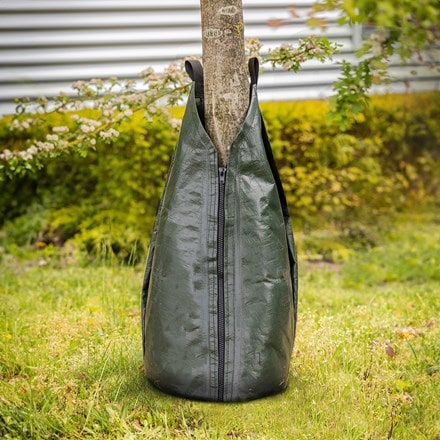

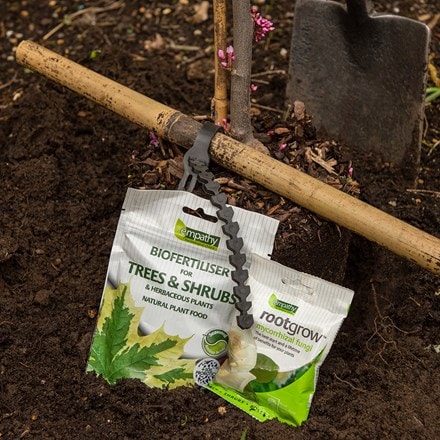
Premium tree planting kit with bamboo stake
kit & bamboo tree stake
£21.35
In stock (delivery within 3-4 working days)
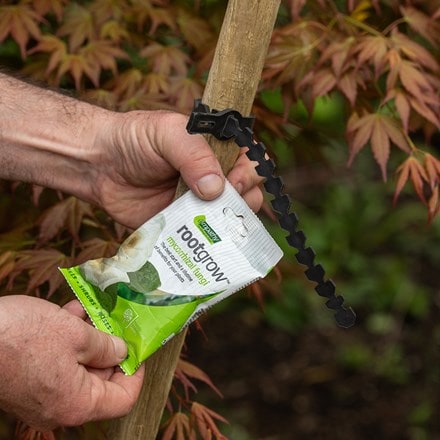
Essential tree planting kit with softwood stake
kit with with softwood stake
£12.97
In stock (delivery within 3-4 working days)