Silene uniflora
sea campion

- approx 100 seeds
- £2.99
- available to order from summer
Delivery options
- Seed Packets (only) £2.99
- Position: full sun
- Soil: moist, but well-drained soil
- Rate of growth: average
- Hardiness: fully hardy (but often short-lived)
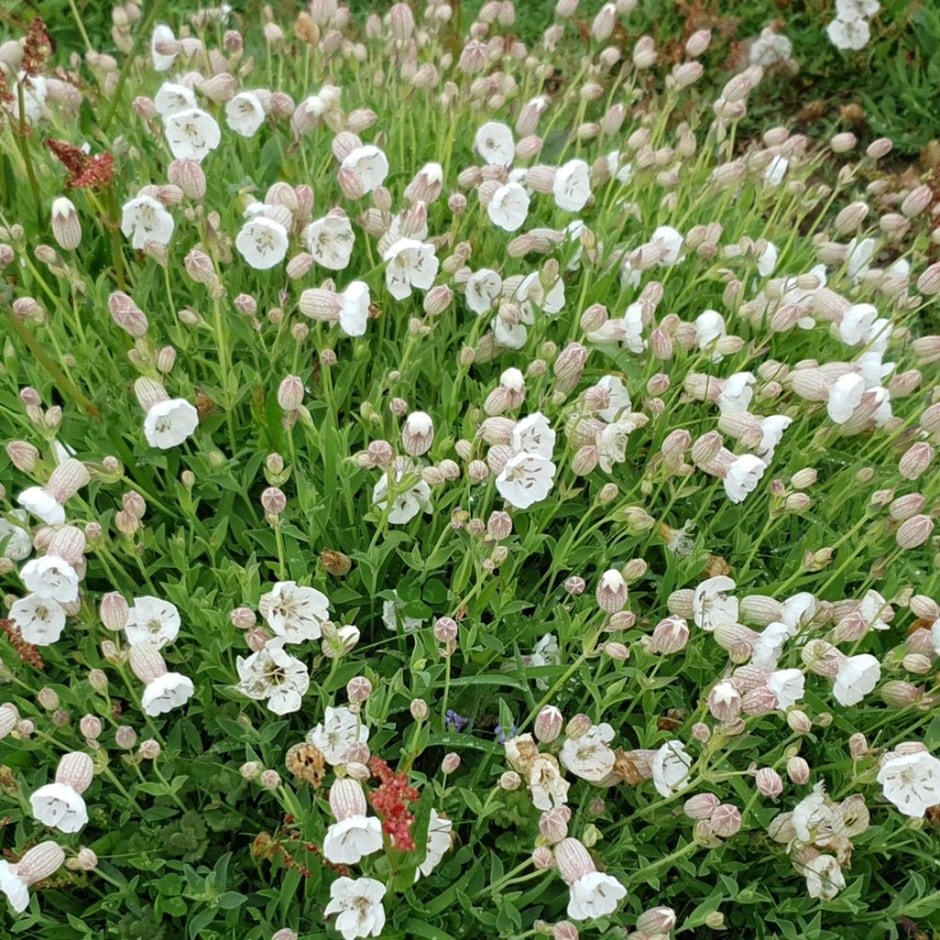
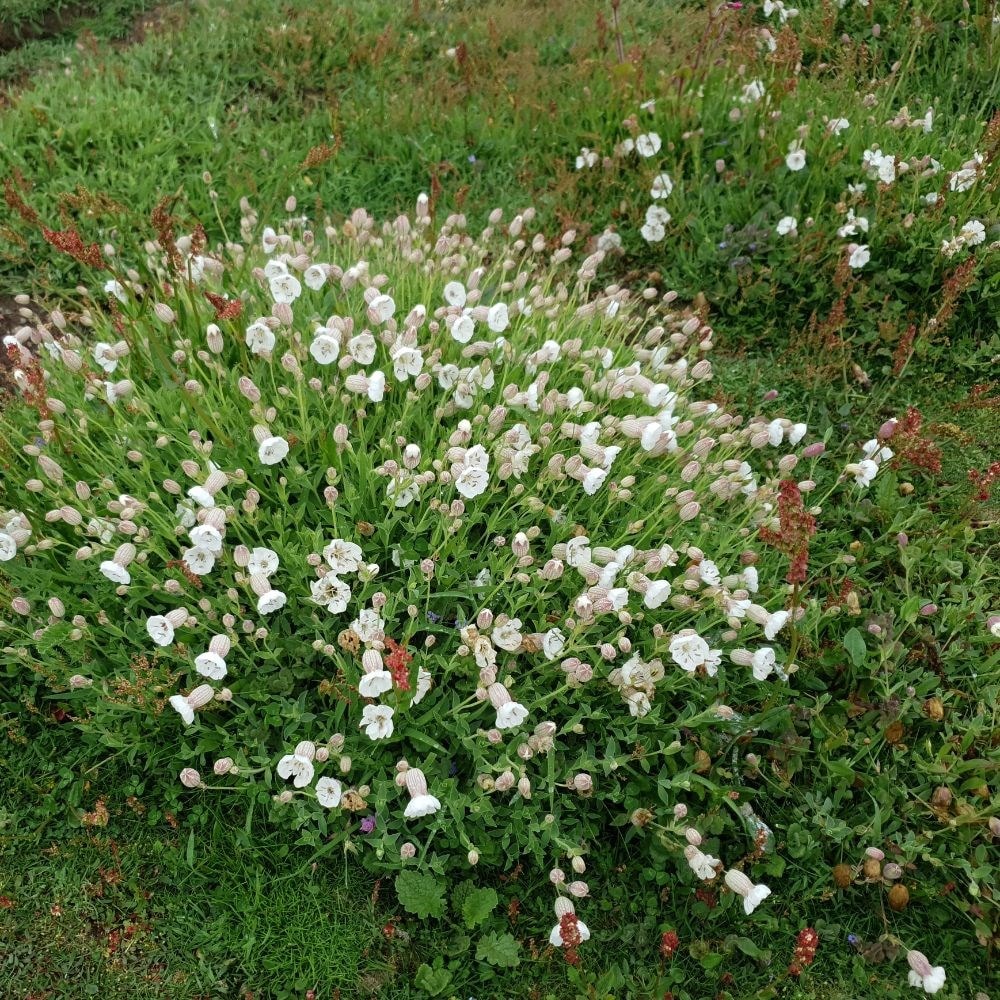
An unusual form of the ever popular campion, Silene uniflora forms a relatively low mat of grey-green foliage, which in summer, is crowned with slender stems bearing single white flowers. Found colonising coastal regions, this sought after, short-lived perennial looks great in gravel gardens, rockeries, dry stone walls or spilling over the edges of a pot.
Once planted out, Silene prefers a spot in full sun with fertile, moisture-retentive but well-drained soil. Water regularly during dry spells, especially in the first season while plants establish. Avoid waterlogged conditions, as they can cause root rot.
Deadhead spent flowers to encourage continued blooming, or leave some seed heads if you want it to self-seed. Tall stems may benefit from staking in exposed spots to prevent flopping. Cut back spent growth in autumn or early spring.
Deadhead spent flowers to encourage continued blooming, or leave some seed heads if you want it to self-seed. Tall stems may benefit from staking in exposed spots to prevent flopping. Cut back spent growth in autumn or early spring.
Sow indoors from late winter to early spring (February to April) at around 18-21°C (64-70°F) in trays of moist seed compost. Sow the seeds thinly on the surface and lightly press them in, but don’t cover, as light aids germination. Keep the compost moist but not wet.
Germination typically takes 2–3 weeks. Once seedlings are large enough to handle, pot them on individually and grow on in cooler conditions. Harden off before planting out after the last frost. Alternatively, sow direct outdoors in late spring, in finely prepared soil. Thin seedlings to final spacing once established.
Germination typically takes 2–3 weeks. Once seedlings are large enough to handle, pot them on individually and grow on in cooler conditions. Harden off before planting out after the last frost. Alternatively, sow direct outdoors in late spring, in finely prepared soil. Thin seedlings to final spacing once established.