Eventual height & spread
Sorbus 'Apricot Queen'
mountain ash, Rowan ( syn. Sorbus × arnoldiana 'Apricot Queen' )

- bare root | 1.2m tall
- £39.99
- available to order from winter
Delivery options
- Standard £12.99
- Position: full sun
- Soil: moderately fertile, moist but well-drained soil
- Rate of growth: average to fast
- Flowering period: April to May
- Hardiness: fully hardy
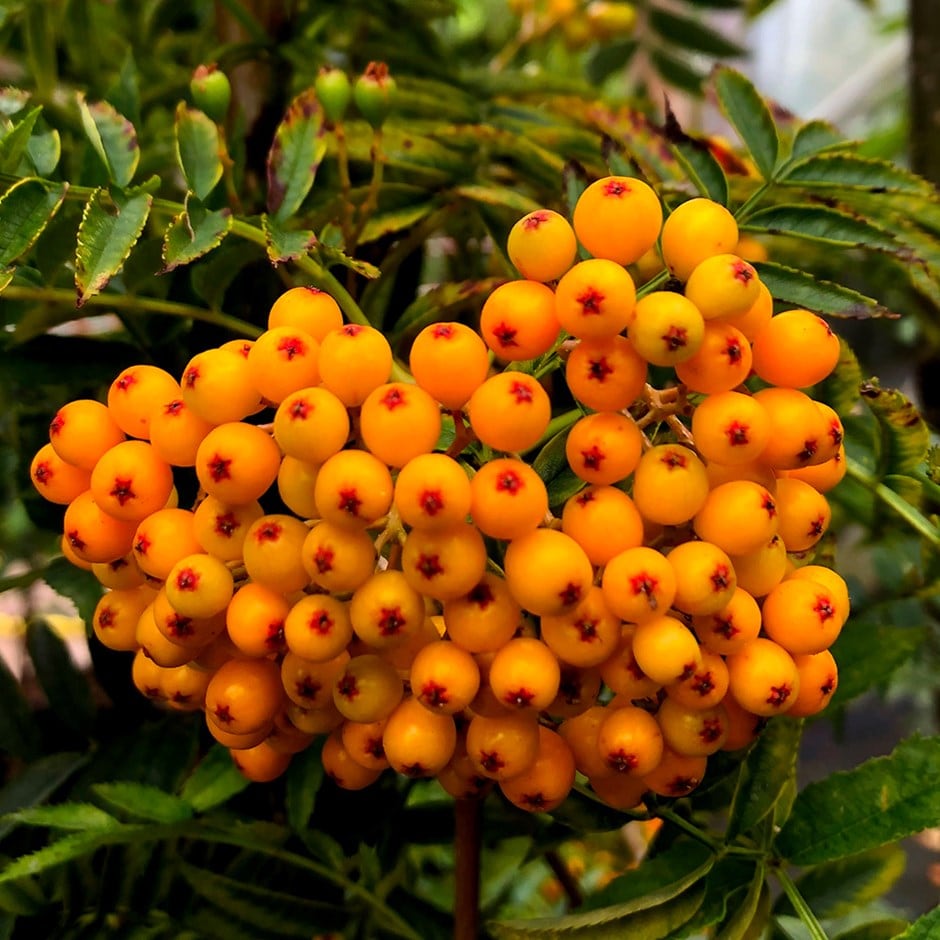
A beautiful small to medium-sized British native rowan known for its stunning autumn display and bearing heavy clusters of apricot-yellow berries, providing a vital food source for birds. As autumn arrives, the foliage turns fiery shades of purple, red, and orange, showcasing the distinctive mountain ash leaf shape.
This tree is hardy and adaptable to various soils, making it a quick and easy choice for an ornamental focal point. Its bushy nature ensures it remains a hub of activity for birds and wildlife throughout the year. With its dark green, toothed leaves, creamy-white spring flowers, and striking autumnal transformation, 'Apricot Queen' is a hardy and versatile addition to any garden.
This tree is hardy and adaptable to various soils, making it a quick and easy choice for an ornamental focal point. Its bushy nature ensures it remains a hub of activity for birds and wildlife throughout the year. With its dark green, toothed leaves, creamy-white spring flowers, and striking autumnal transformation, 'Apricot Queen' is a hardy and versatile addition to any garden.
Avoiding frozen and waterlogged soil, trees should be planted out as they arrive. If you've ordered a bare root tree, soak the roots in a bucket of water for half an hour prior to planting, or if this is not possible, they can be heeled in temporarily, covering their roots with soil, or potted up.
Protect from cold, drying winds. When planting incorporate lots of well-rotted garden compost in the planting hole. To safeguard your trees during shipping and their initial growth, we may supply them attached to a bamboo cane. This support system helps prevent bending or snapping during the early years, ensuring a strong and healthy start. We recommend leaving the cane in place for up to three years, checking the ties seasonally to prevent excessive tightening. Once the tree has developed sufficient strength to stand independently, the cane can be removed. In addition, we advise staking the tree and any attached cane, securely to provide additional support.
Requires minimal pruning. Remove any broken, diseased or crossing branches in late autumn or winter.
Protect from cold, drying winds. When planting incorporate lots of well-rotted garden compost in the planting hole. To safeguard your trees during shipping and their initial growth, we may supply them attached to a bamboo cane. This support system helps prevent bending or snapping during the early years, ensuring a strong and healthy start. We recommend leaving the cane in place for up to three years, checking the ties seasonally to prevent excessive tightening. Once the tree has developed sufficient strength to stand independently, the cane can be removed. In addition, we advise staking the tree and any attached cane, securely to provide additional support.
Requires minimal pruning. Remove any broken, diseased or crossing branches in late autumn or winter.
- Humans/Pets: Fruit are ornamental - not to be eaten
Goes well with
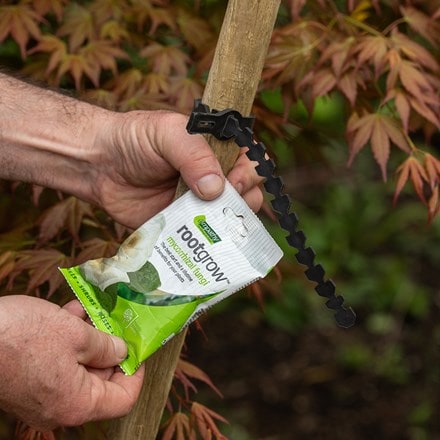
Essential tree planting kit with softwood stake
kit with with softwood stake
£12.97
In stock (delivery within 3-4 working days)
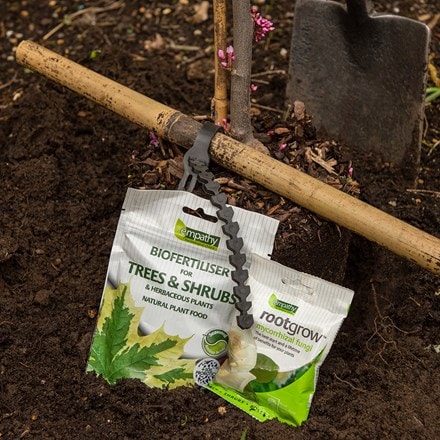
Premium tree planting kit with bamboo stake
kit & bamboo tree stake
£21.35
available to order from winter