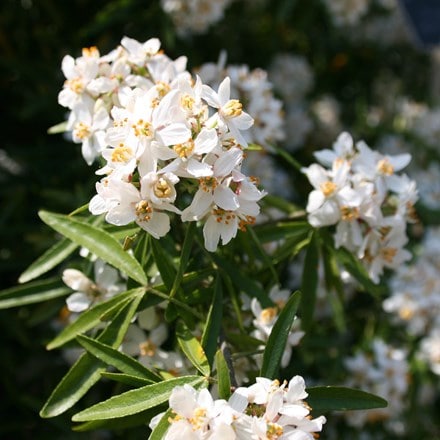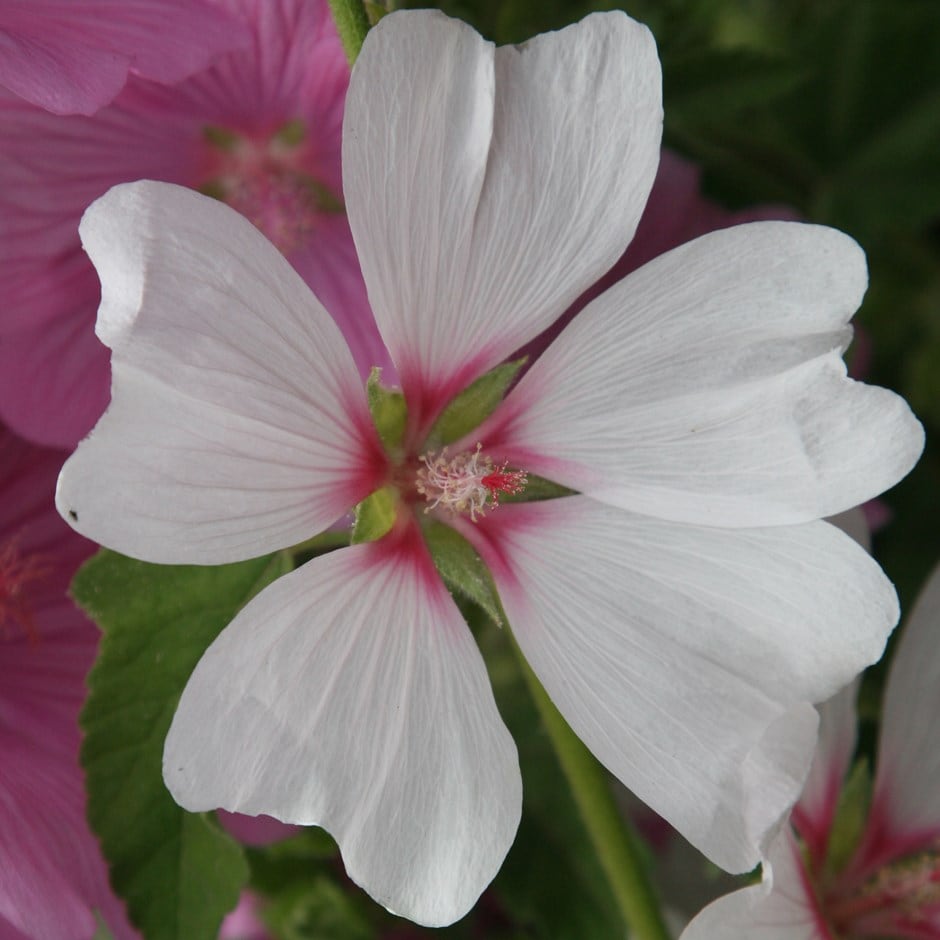
Malva × clementii 'Barnsley'
mallow (syn. Lavatera)

- 2 litre pot
- £21.99
- In stock (shipped within 2-3 working days)
Delivery options
- Standard £5.99
- Position: full sun
- Soil: light, moderately fertile, well-drained soil
- Rate of growth: fast
- Flowering period: June to September
- Hardiness: fully hardy
This popular shrub is grown for the masses of red-eyed flowers that smother its branches from June to September. Initially white in colour, the flowers age to a soft pink, and they look very pretty against the backdrop of deeply lobed grey-green leaves. Extremely long-flowering, this vigorous, semi-evergreen mallow will thrive in a well-drained shrub or mixed border, but needs plenty of space to spread itself out (as it puts on lots of growth in just one season. In cold areas of the country 'Barnsley' is best grown against a warm wall to minimise wind and frost damage.
Plant Malva in a sunny position with well-drained, moderately fertile soil, adding organic matter at planting time for best results. Space plants around 45cm (18in) apart to improve air circulation and reduce the risk of mildew.
Water regularly until established, then only during prolonged dry spells, as mature plants become drought-tolerant. Apply a balanced fertiliser in spring to support growth and flowering, but avoid excessive nitrogen, which can encourage more leaves than blooms.
Keep an eye out for rust and powdery mildew, removing affected leaves and ensuring good airflow to prevent disease.
In exposed areas, tall stems may need staking to prevent wind damage. Deadhead spent flowers regularly to prolong blooming and reduce self-seeding unless seedlings are desired. After flowering, cut back to within 30cm (12in) of the ground in spring once frosts have passed, and mulch with well-rotted compost or manure to retain moisture and improve soil structure.
In windy sites, shortening stems by half in autumn helps minimise the risk of damage.
Water regularly until established, then only during prolonged dry spells, as mature plants become drought-tolerant. Apply a balanced fertiliser in spring to support growth and flowering, but avoid excessive nitrogen, which can encourage more leaves than blooms.
Keep an eye out for rust and powdery mildew, removing affected leaves and ensuring good airflow to prevent disease.
In exposed areas, tall stems may need staking to prevent wind damage. Deadhead spent flowers regularly to prolong blooming and reduce self-seeding unless seedlings are desired. After flowering, cut back to within 30cm (12in) of the ground in spring once frosts have passed, and mulch with well-rotted compost or manure to retain moisture and improve soil structure.
In windy sites, shortening stems by half in autumn helps minimise the risk of damage.
Goes well with
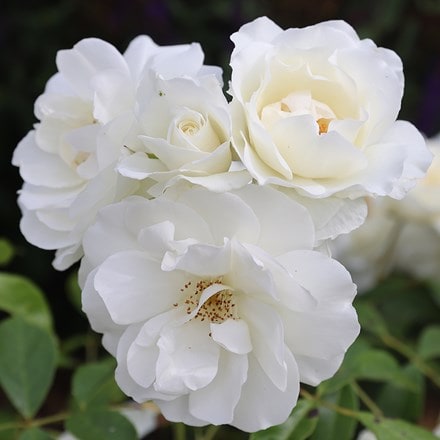
Rosa Iceberg ('Korbin')
4 litre | bare root potted
£22.94
In stock (shipped within 2-3 working days)