Myrtus communis subsp. tarentina
myrtle


- 2 litre pot
- £34.99
- In stock (shipped within 2-3 working days)
Delivery options
- Standard £5.99
- Position: full sun
- Soil: fertile, moist, well-drained soil
- Rate of growth: average
- Flowering period: July to August
- Hardiness: frost hardy (needs winter protection)
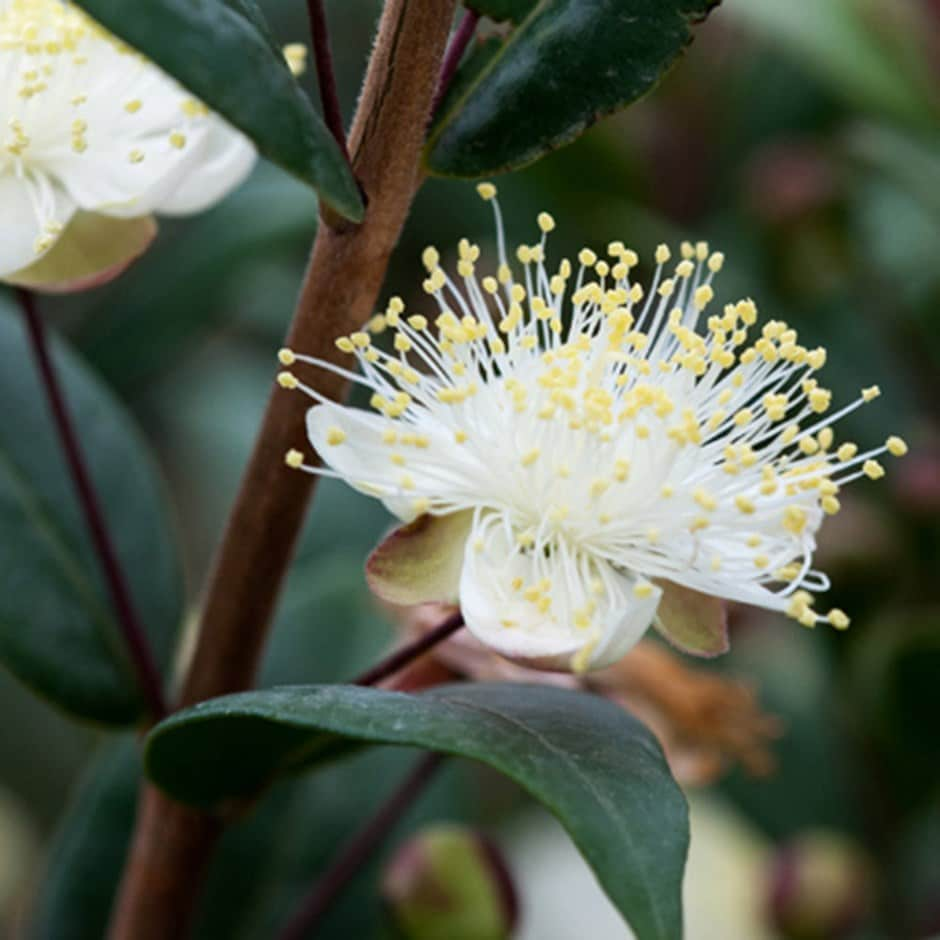
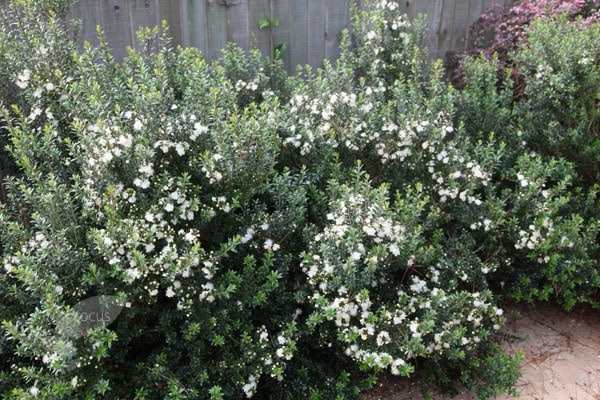
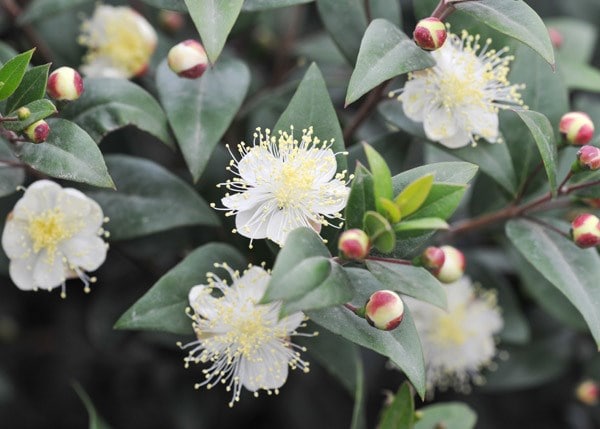
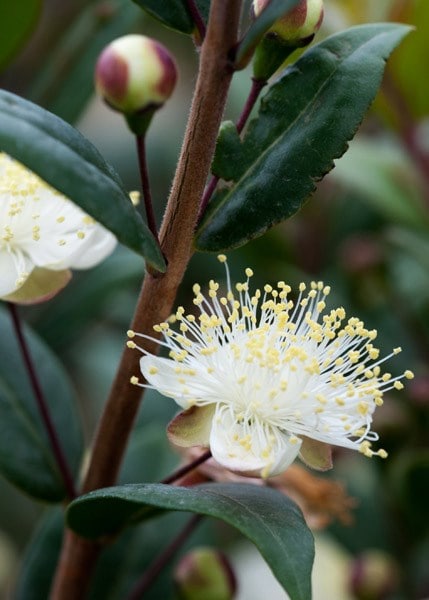
This small-leaved myrtle has large, pink-tinted cream flowers in summer offset beautifully by glossy, dark green leaves. The unscented flowers are followed, in autumn, by white berries. More compact and rounded than the species plant, Myrtus communis subsp. tarentina is a great choice for a sheltered, sunny spot in the garden.
Choose a warm, sheltered spot in full sun with well-drained soil, ideally against a south or west-facing wall which provides additional warmth and protection. Dig in plenty of grit or sharp sand if your soil is heavy to improve drainage, as waterlogged conditions can be problematic, particularly in winter.
Water regularly during the first growing season until established, then water during prolonged dry spells as the plant prefers consistent moisture in summer. Feed with a balanced fertiliser in spring to encourage healthy growth and flowering.
Prune lightly after flowering in late summer to maintain shape, or clip formally grown specimens two or three times during the growing season. In colder regions, consider growing in a large container that can be moved to a frost-free greenhouse or cool conservatory over winter, or provide additional protection with horticultural fleece during severe cold snaps.
Myrtle is relatively low-maintenance once established, thriving in coastal gardens and tolerating salt-laden winds better than harsh, cold conditions.
Water regularly during the first growing season until established, then water during prolonged dry spells as the plant prefers consistent moisture in summer. Feed with a balanced fertiliser in spring to encourage healthy growth and flowering.
Prune lightly after flowering in late summer to maintain shape, or clip formally grown specimens two or three times during the growing season. In colder regions, consider growing in a large container that can be moved to a frost-free greenhouse or cool conservatory over winter, or provide additional protection with horticultural fleece during severe cold snaps.
Myrtle is relatively low-maintenance once established, thriving in coastal gardens and tolerating salt-laden winds better than harsh, cold conditions.
- Humans/Pets: Fruit are ornamental - not to be eaten