Philadelphus Petite Perfume White ('W1') (PBR)
mock orange

- 2 litre pot
- £24.99
- In stock (delivery within 2-3 working days)
Delivery options
- Standard £5.99
- Position: full sun to partial shade
- Soil: moderately fertile, moist but well-drained soil
- Rate of growth: average
- Flowering period: June to July
- Hardiness: fully hardy
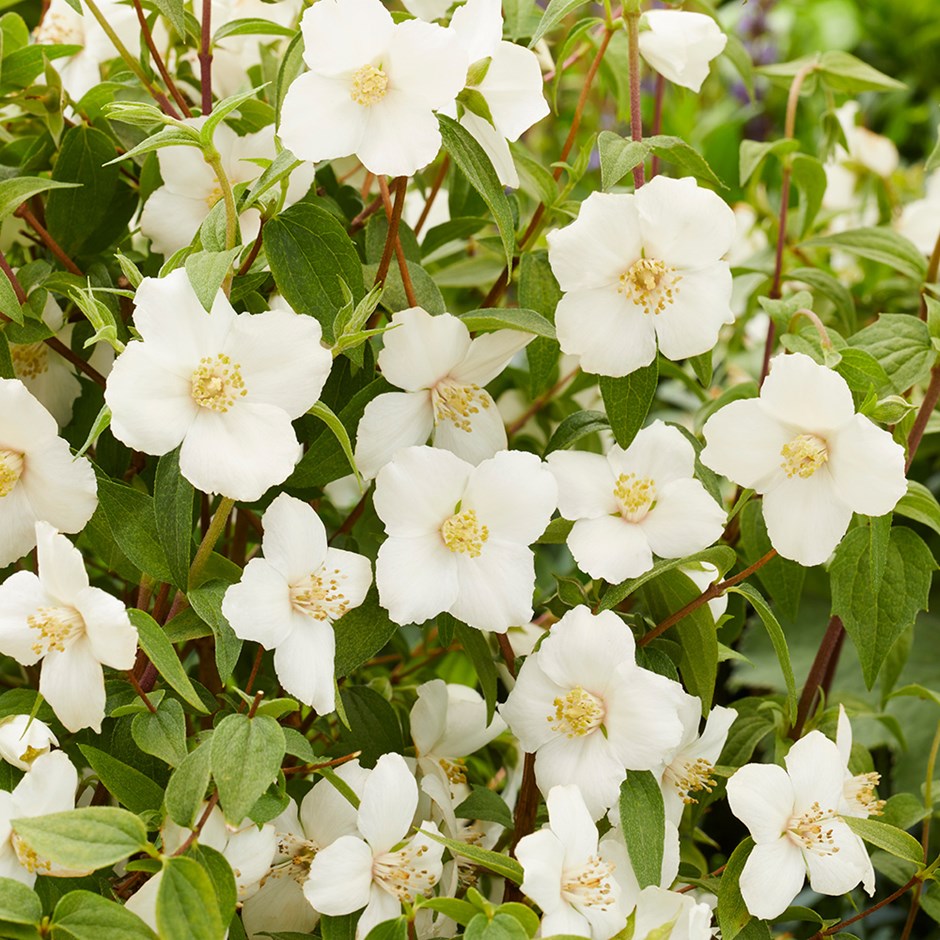
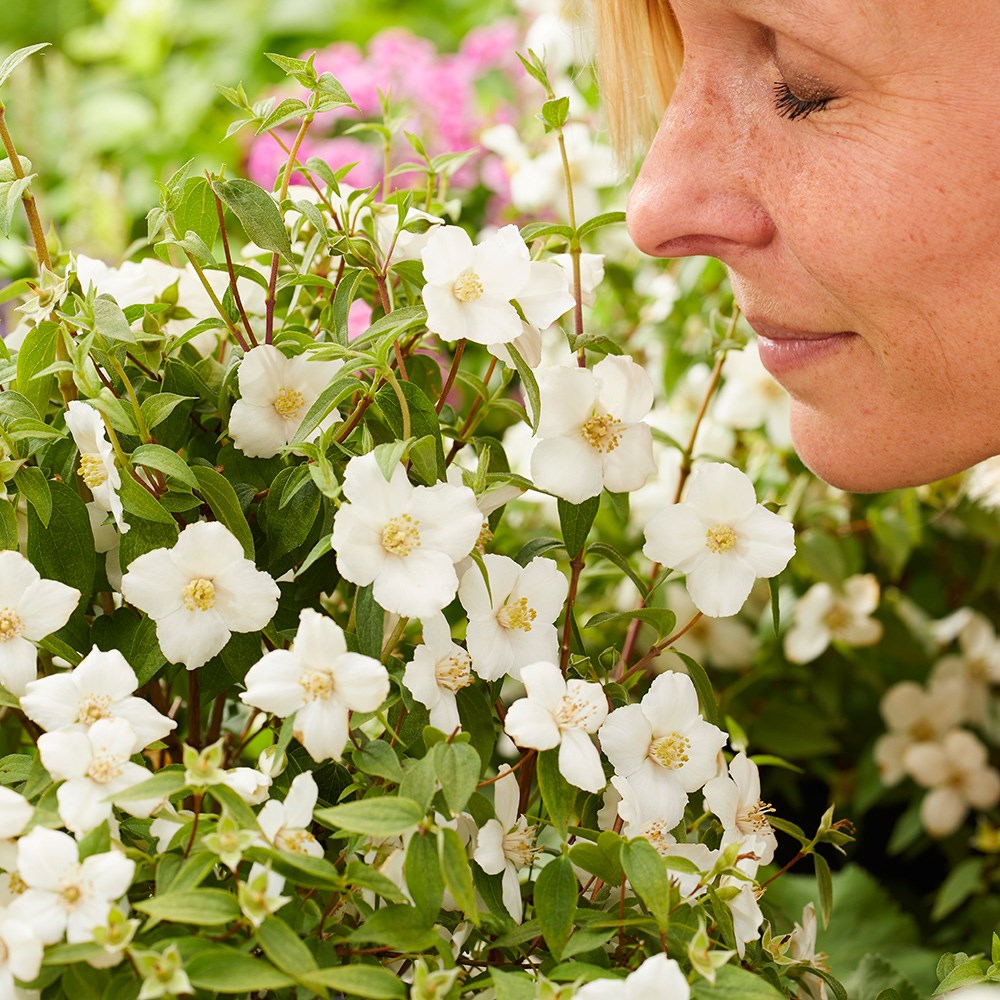
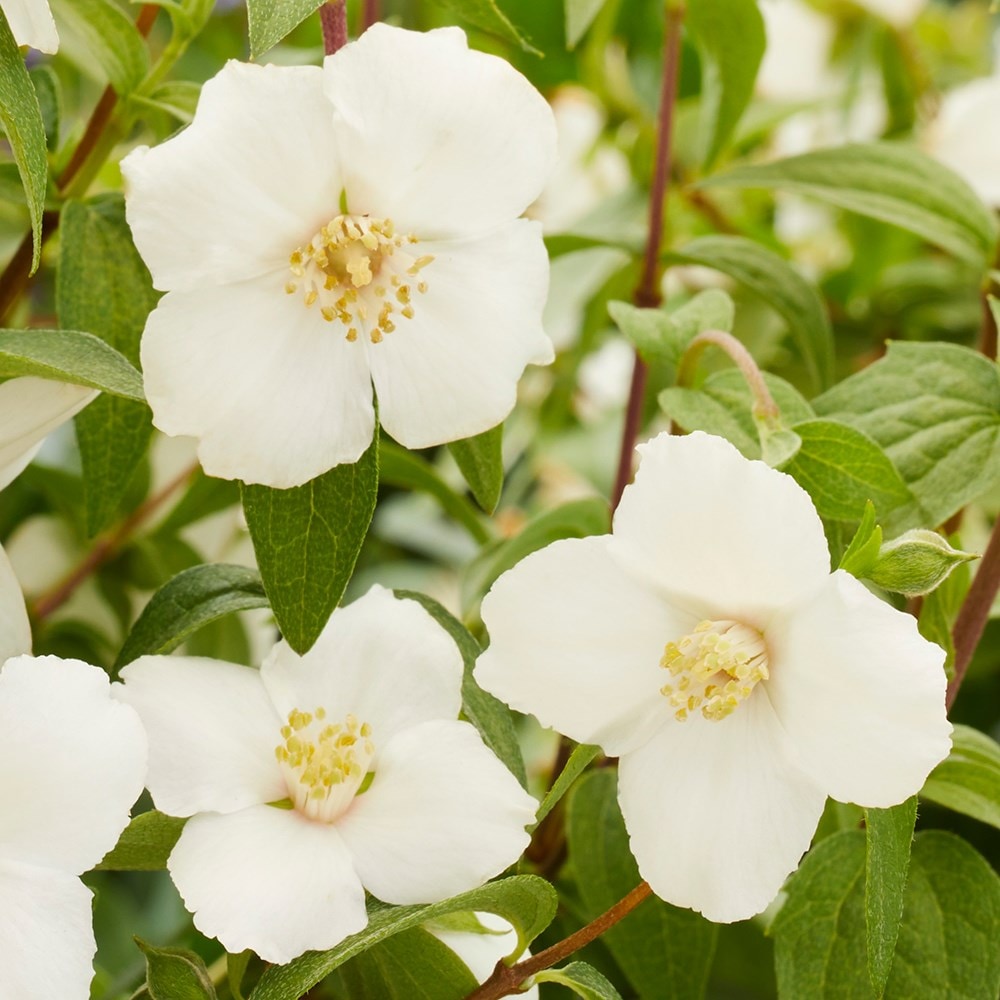
Boasting dark green foliage and an abundance of pure white, highly fragrant flowers, 'Petite Perfume White’ is a compact deciduous shrub that commands attention in any garden. Unlike many other philadelphus, its flowers gleam with a clarity unmatched, adorning its compact, mound-forming habit with bright white blooms that captivate the senses.
With hundreds of flowers gracing its branches for up to six weeks, this shrub becomes a beacon for bees and butterflies, drawing them from far and wide. Its resilience to air pollution and drought once established makes it a versatile choice for urban and coastal landscapes, while its charming presence enhances woodland gardens, borders, containers, and scented gardens alike.
With hundreds of flowers gracing its branches for up to six weeks, this shrub becomes a beacon for bees and butterflies, drawing them from far and wide. Its resilience to air pollution and drought once established makes it a versatile choice for urban and coastal landscapes, while its charming presence enhances woodland gardens, borders, containers, and scented gardens alike.
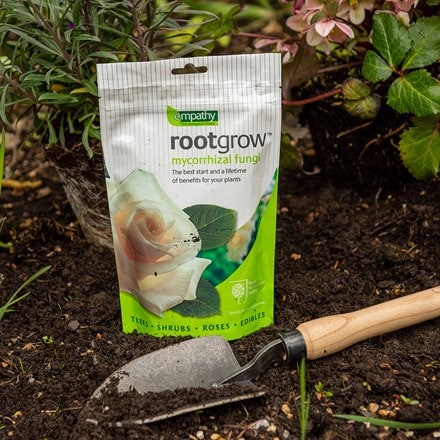
When planting Philadelphus, ensure the roots are firmly covered with well-rotted compost or manure and add a sprinkling of mycorrhizal fungi onto the roots and into the planting hole. Keeping it well watered during the first growing season will help it settle in easily.
Mulch around the roots in spring with a deep layer of well-rotted garden compost or manure. Prune in late summer, immediately after flowering, removing one in four of the older stems to ground level.
Mulch around the roots in spring with a deep layer of well-rotted garden compost or manure. Prune in late summer, immediately after flowering, removing one in four of the older stems to ground level.