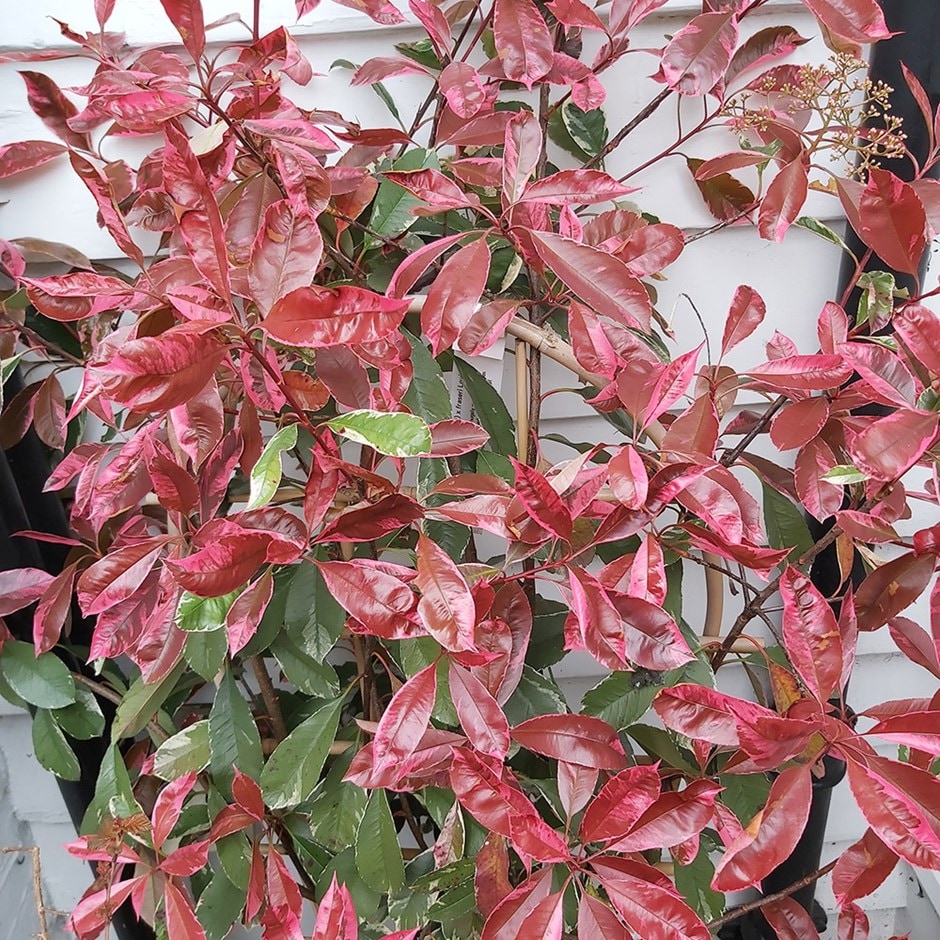
Photinia × fraseri Louise ('Mclarlou') (PBR)
photinia
- 2 litre pot
- £16.79 £27.99
- In stock (delivery within 2-3 working days)
- 3 × 2 litre pots
- £38.99 £64.99 £13.00 each
- In stock (delivery within 2-3 working days)
- 7.5 litre pot | 60 - 80cm tall
- £83.99 £119.99
- In stock (delivery within 2-3 working days)
Delivery options
- Standard £5.99
- Position: full sun or partial shade
- Soil: moderately fertile, moist but well-drained soil
- Rate of growth: average to fast
- Flowering period: April to May
- Hardiness: frost hardy (may need winter protection)
Photinia × fraseri Louise is a relatively fast-growing evergreen shrub or small tree with striking, bright red new shoots that mature to an attractive marbled variegation containing green, pink, creamy-white colourings.
A compact, dense form, it's perfectly proportioned little tree for sheltered small gardens and patio pots requiring year-round interest. In late spring, white flowers appear in clusters and provide an additional burst of beauty. Also, like other photinia, it can be lightly clipped to form an impressive evergreen hedge at maturity, or as a fast-growing barrier plant to hide eyesores or provide screening for privacy.
To find out more about how to plant a hedge, click here
A compact, dense form, it's perfectly proportioned little tree for sheltered small gardens and patio pots requiring year-round interest. In late spring, white flowers appear in clusters and provide an additional burst of beauty. Also, like other photinia, it can be lightly clipped to form an impressive evergreen hedge at maturity, or as a fast-growing barrier plant to hide eyesores or provide screening for privacy.
To find out more about how to plant a hedge, click here
Plant in fertile, well-drained soil in a position with full sun or partial shade, ideally sheltered from cold winds.
Water regularly during the first year to help establish a strong root system, then reduce watering once mature, as it becomes more drought-tolerant. In spring, feed with a balanced fertiliser to promote healthy growth and vibrant foliage.
To encourage a profusion of bright young leaves in late spring or summer shorten the stems of established specimens by up to 15cm (6in), to just above an outward-facing bud. Apply a generous 5-7cm (2-3in) mulch of well-rotted garden compost or manure around the base of the plant in early spring.
Water regularly during the first year to help establish a strong root system, then reduce watering once mature, as it becomes more drought-tolerant. In spring, feed with a balanced fertiliser to promote healthy growth and vibrant foliage.
To encourage a profusion of bright young leaves in late spring or summer shorten the stems of established specimens by up to 15cm (6in), to just above an outward-facing bud. Apply a generous 5-7cm (2-3in) mulch of well-rotted garden compost or manure around the base of the plant in early spring.
- Humans/Pets: Fruit are ornamental - not to be eaten