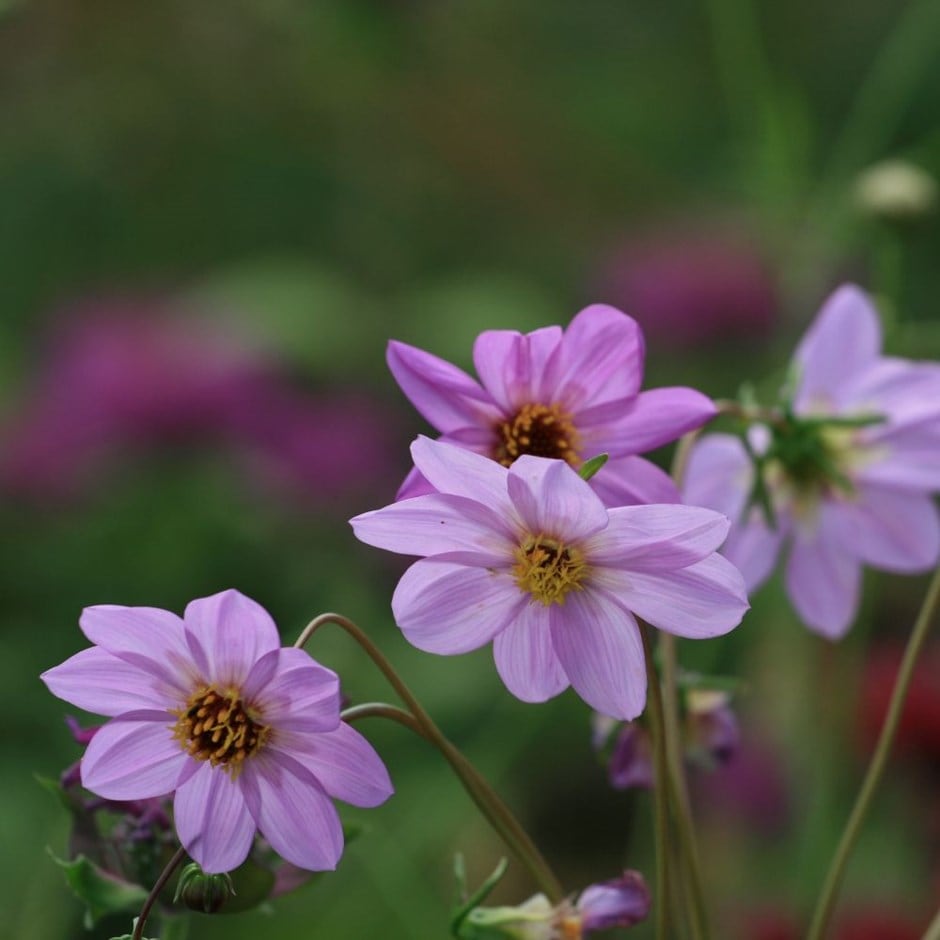
Dahlia merckii
merck dahlia


- 1 × tuber
- £6.99
- In stock (delivery within 2-3 working days)
- 3 × tubers
- £16.50 £5.50 each
- In stock (delivery within 2-3 working days)
- approx 10 seeds
- £5.99
- In stock (delivery within 2-3 working days)
- 9cm pot
- £7.64 £8.99
- available to order from spring
- 3 × 9cm pots
- £18.69 £21.99 £6.23 each
- available to order from spring
Delivery options
- Bulbs (only) £4.99
- Position: full sun
- Soil: moderately fertile, moist but well-drained soil, or general-purpose compost for containers
- Rate of growth: average
- Flowering period: June to October
- Hardiness: half hardy (may need winter protection)
Single flowers up to 8cm (3in) wide, in shades of pink top arching or upright flower stems from mid summer. This Mexican native is one of the hardiest forms, so may survive outside through the winter in sheltered gardens.
Dahlia merckii is a towering beauty, which will provide long-lasting colour towards the back of a mixed border without becoming overpowering.
Dahlia merckii is a towering beauty, which will provide long-lasting colour towards the back of a mixed border without becoming overpowering.
We offer this Dahlia, where available, as seeds, tubers, and ready potted plants.
Dahlia tubers can be planted outside after frost, or started off in pots under glass in late winter to early spring. Plant them horizontally approximately 12cm (5in) deep, making sure the ‘eyes’ are uppermost. Allow enough room between each tuber so the plants can grow and spread to their full size without being over-crowded.
Potted plants should be protected from frost in a well-lit location such as a frost-free greenhouse, cold porch, or cold-frame. Gradually acclimatise (harden-off) in mid-late spring before planting out into borders, protecting from late frosts with cloches or horticultural fleece.
While in growth, provide a high-nitrogen liquid feed each week in June, then a high-potash fertiliser each week from July to September. Stake with canes or brushwood if it becomes necessary. In mild areas, leave them in situ over winter, but protect the crown with a generous layer of dry mulch.
In colder areas, carefully lift and clean the tubers once the first frosts have blackened the foliage and allow them to dry naturally indoors. Then place the dry tubers in a shallow tray, just covered with slightly moist potting compost, sand or vermiculite and store in a frost-free place until planting out again.
Dahlia tubers can be planted outside after frost, or started off in pots under glass in late winter to early spring. Plant them horizontally approximately 12cm (5in) deep, making sure the ‘eyes’ are uppermost. Allow enough room between each tuber so the plants can grow and spread to their full size without being over-crowded.
Potted plants should be protected from frost in a well-lit location such as a frost-free greenhouse, cold porch, or cold-frame. Gradually acclimatise (harden-off) in mid-late spring before planting out into borders, protecting from late frosts with cloches or horticultural fleece.
While in growth, provide a high-nitrogen liquid feed each week in June, then a high-potash fertiliser each week from July to September. Stake with canes or brushwood if it becomes necessary. In mild areas, leave them in situ over winter, but protect the crown with a generous layer of dry mulch.
In colder areas, carefully lift and clean the tubers once the first frosts have blackened the foliage and allow them to dry naturally indoors. Then place the dry tubers in a shallow tray, just covered with slightly moist potting compost, sand or vermiculite and store in a frost-free place until planting out again.
Sow from late winter onwards in fine, seed compost 6mm (¼in) deep. Keep in a greenhouse or on a sunny windowsill above 65°F (18°C) until germination, which usually takes between 7 and 10 days. Ensure soil is kept moist but not wet, and when large enough to handle, prick out and transplant to trays or individual pots, and move to cooler conditions.
- Humans/Pets: Ornamental bulbs - not to be eaten