Penstemon 'Pensham Laura' (Pensham Series)
beard tongue

- 9cm pot
- £8.99
- In stock (delivery within 2-3 working days)
- 3 × 9cm pots
- £19.99 £6.66 each
- In stock (delivery within 2-3 working days)
- 6 × 9cm pots
- £37.99 £6.33 each
- In stock (delivery within 2-3 working days)
Delivery options
- Standard £5.99
- Position: full sun or partial shade
- Soil: fertile, well-drained soil
- Rate of growth: average
- Flowering period: July to October
- Hardiness: frost hardy (will need winter protection in cold areas)
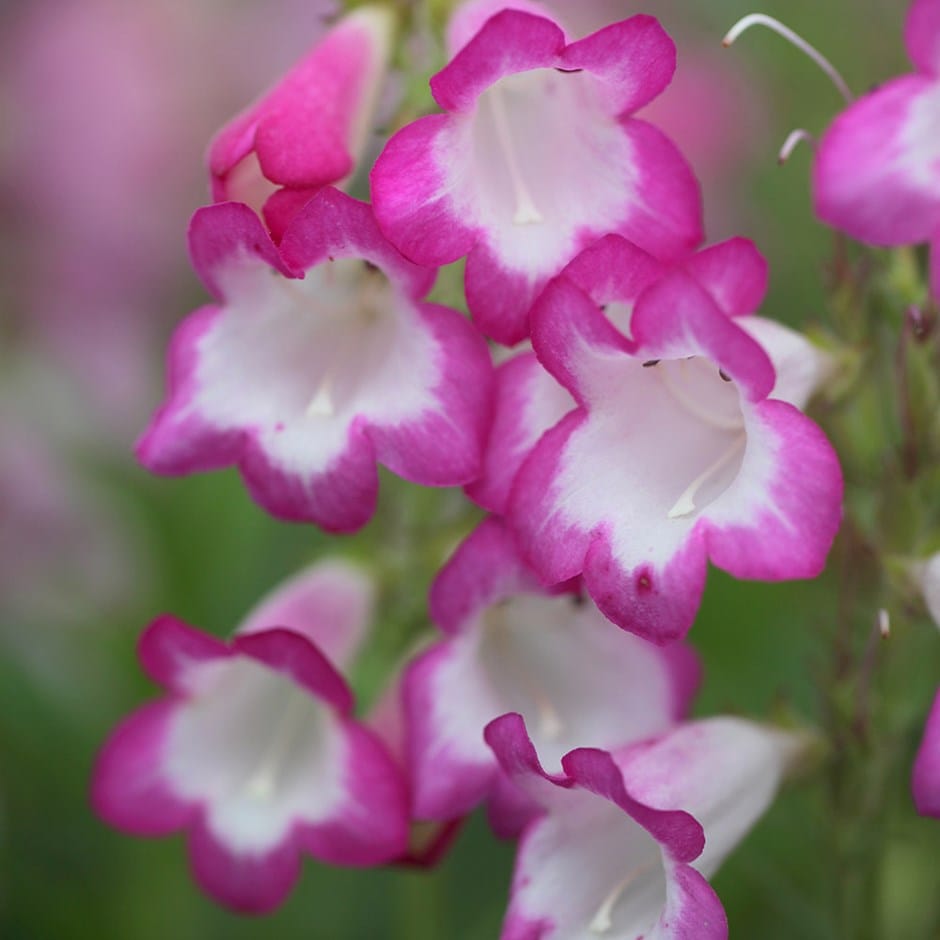
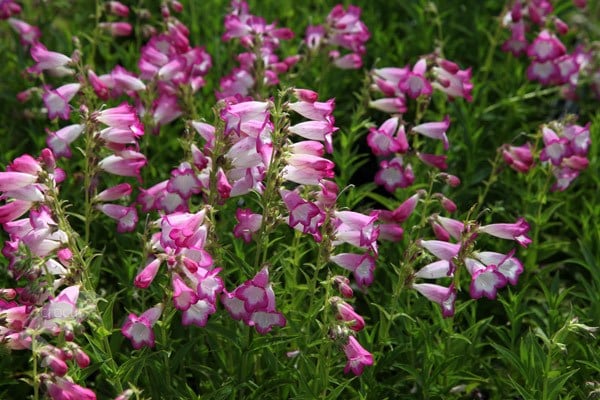
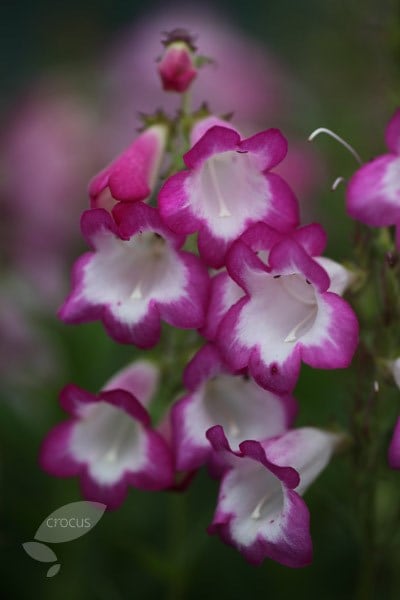
Each white trumpet-shaped flower flares out at the base, where its lobed edges are coloured a vibrant lipstick pink. This creates a distictive, two-tone effect. The flowers form in loose clusters on upright stems, which open from the base upwards over a long period from midsummer. A prolific flowerer, Penstemon 'Pensham Laura' is hardier than many other beard tongues, and is even said to be resistant to slug damage. The pretty colouring of the flowers means it blends easily with many other shades, but it looks particularly good with deeper pinks, lilac and purple.
Plant penstemons in well-drained soil in a sunny or lightly shaded position, incorporating compost or well-rotted manure to improve fertility. Water regularly until established, then reduce watering, as they prefer drier conditions once settled.
Deadhead faded blooms frequently to extend the flowering season. In autumn, leave the top growth in place to provide winter protection, then cut back in spring when new shoots emerge lower down the stems.
Apply a dry mulch, such as bark or composted straw, around the base in colder regions to insulate the roots from frost. Every few years, lift and divide congested clumps in spring to maintain vigour and encourage fresh growth.
Deadhead faded blooms frequently to extend the flowering season. In autumn, leave the top growth in place to provide winter protection, then cut back in spring when new shoots emerge lower down the stems.
Apply a dry mulch, such as bark or composted straw, around the base in colder regions to insulate the roots from frost. Every few years, lift and divide congested clumps in spring to maintain vigour and encourage fresh growth.