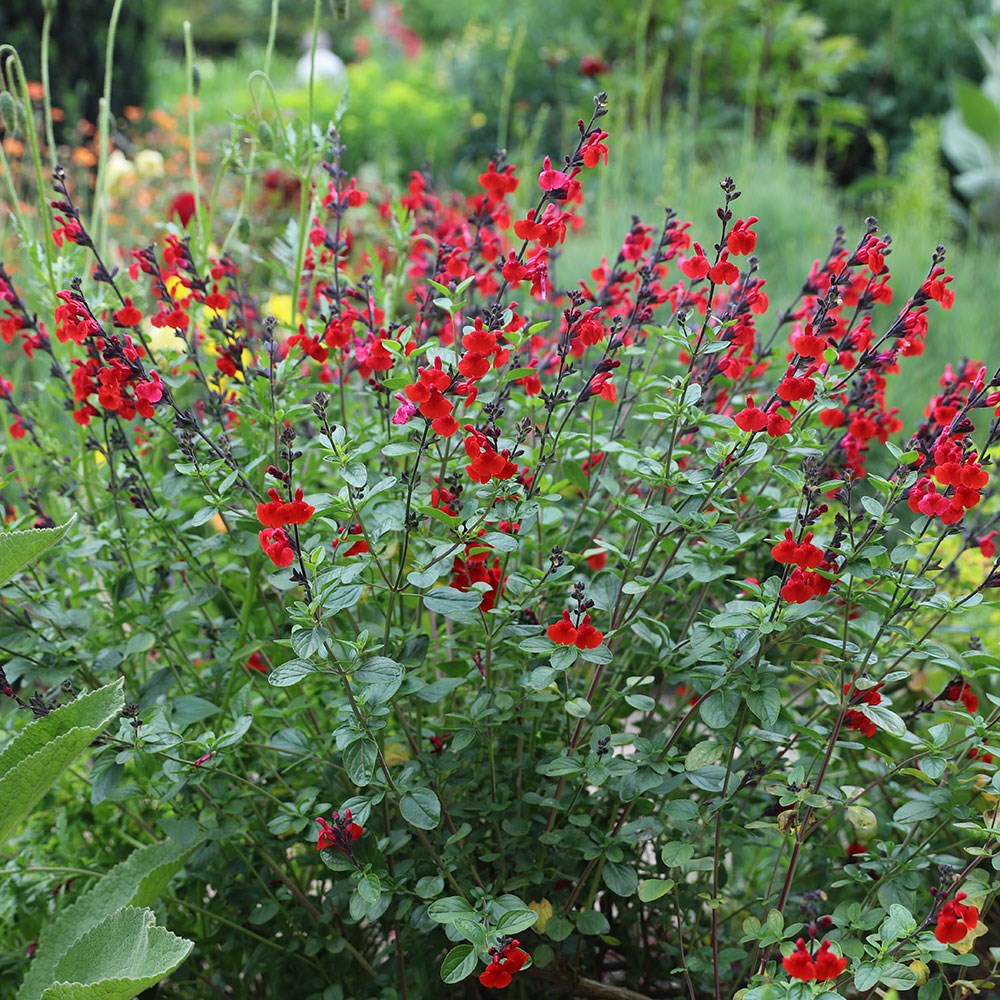
Salvia 'Royal Bumble'
sage


- 9cm pot
- £9.99
- In stock (delivery within 3-4 working days)
- 3 × 9cm pots
- £22.99 £7.66 each
- In stock (delivery within 3-4 working days)
- 6 × 9cm pots
- £39.99 £6.67 each
- In stock (delivery within 3-4 working days)
- 2 litre pot
- £17.99
- available to order from late spring
- 3 × 2 litre pots
- £44.99 £15.00 each
- available to order from late spring
Delivery options
- Standard £5.99
- Position: full light (with a little shade during the hottest part of the day)
- Soil: well-drained soil
- Rate of growth: average
- Flowering period: August to October
- Hardiness: frost hardy (may need winter protection)
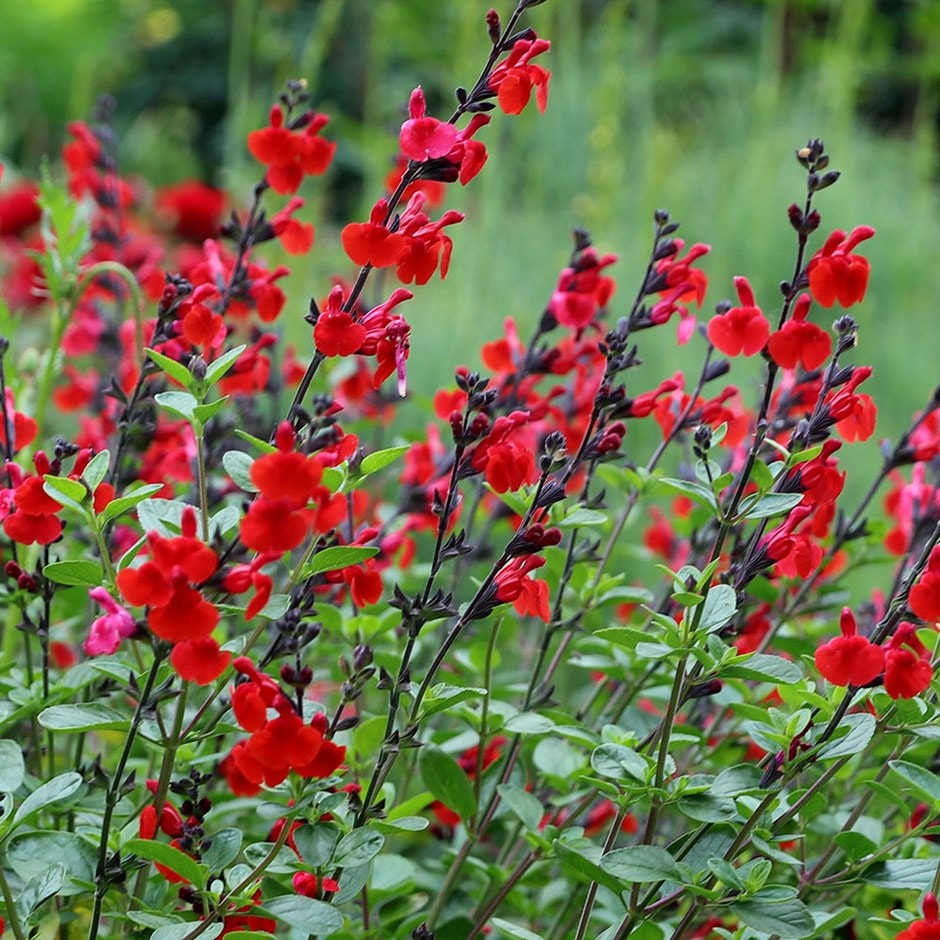
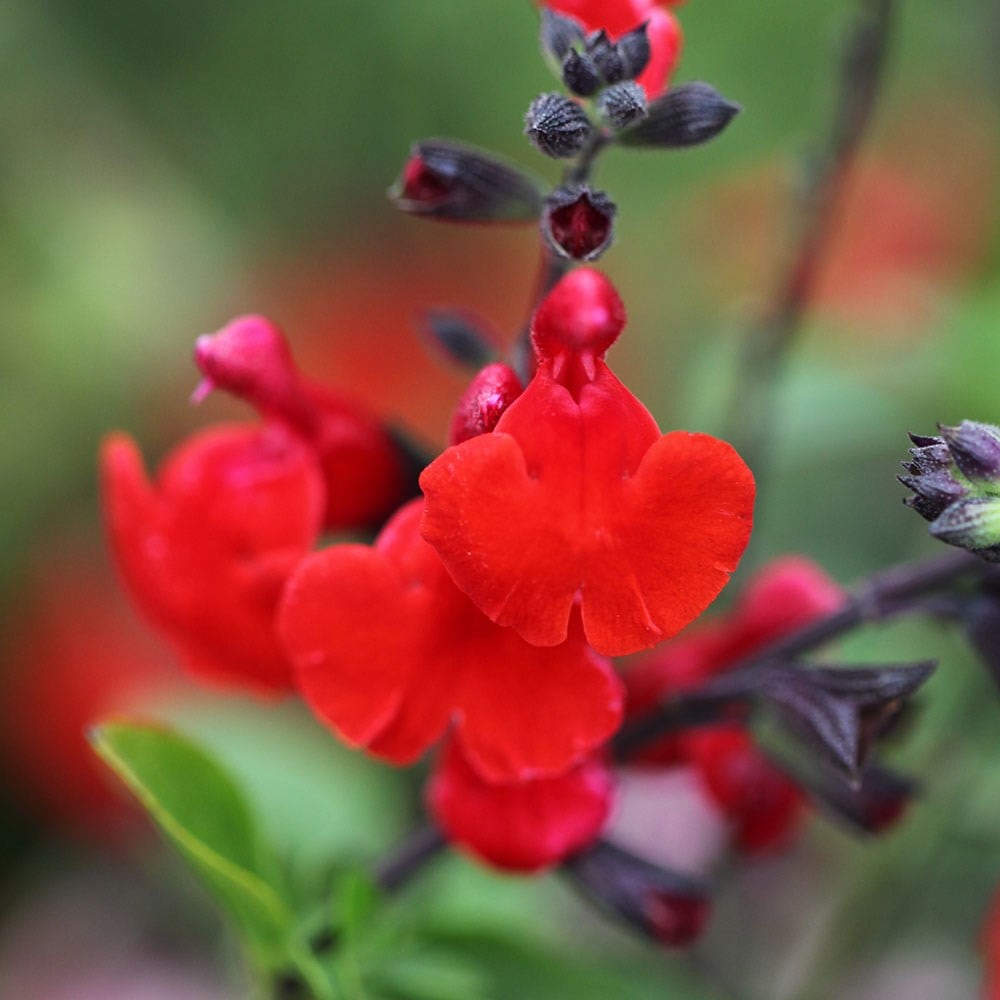
Vibrant red flowers clothe the purple-flushed stems of Salvia 'Royal Bumble' from early summer, putting on an eye-catching display in the border. Tolerant of coastal conditions and lightly dappled shade, with aromatic, glossy, deep-green leaves, this bushy salvia will keep your bees busy to the first frosts.
When planting, improve drainage by incorporating compost and adding horticultural grit or sand to heavier soils. Space plants 30-45cm (12-18in) apart and water thoroughly.
Deadhead spent flower spikes promptly to encourage continuous blooming. Apply a 5-7cm (2-3in) mulch of composted bark or gravel in early spring to retain moisture and suppress weeds, but avoid manure-based mulches, which can be too rich.
Feed with a high-potash fertiliser, such as tomato feed, once growth resumes in spring to promote flowering. Water regularly during dry spells but ensure the soil remains well-drained to prevent root rot.
In colder regions, it may die back, so provide winter protection by applying a dry mulch around the base or lifting and potting up plants to overwinter in a frost-free location.
Deadhead spent flower spikes promptly to encourage continuous blooming. Apply a 5-7cm (2-3in) mulch of composted bark or gravel in early spring to retain moisture and suppress weeds, but avoid manure-based mulches, which can be too rich.
Feed with a high-potash fertiliser, such as tomato feed, once growth resumes in spring to promote flowering. Water regularly during dry spells but ensure the soil remains well-drained to prevent root rot.
In colder regions, it may die back, so provide winter protection by applying a dry mulch around the base or lifting and potting up plants to overwinter in a frost-free location.