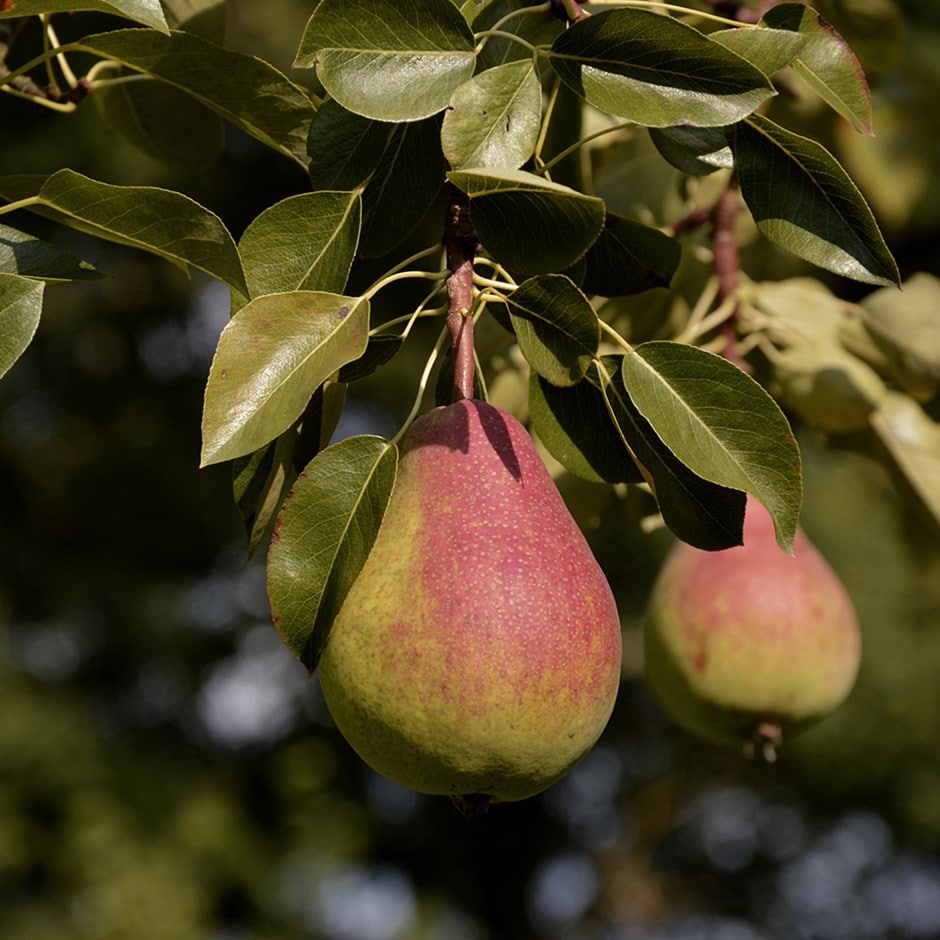
pear 'Beurré Alexandre Lucas'
pear

- bare root | QA root stock | 1.2m
- £34.99
- available to order from spring
Delivery options
- Standard £12.99
- Position: full sun
- Soil: Moderately fertile, moist but well-drained soil
- Rate of growth: average
- Flowering period: April
- Hardiness: fully hardy
Raised in France in 1780, this reliable dessert pear is still sought-after today for its succulent, autumn fruits - and ability to store well. Relatively small in size, the fruits of 'Beurré Alexandre Lucas' have a red-flushed green skin (which takes on a yellowish hue as they ripen), and a sweet, buttery flesh that seems to melt in the mouth. The spring flowers, which are rich in pollen and nectar, are also noteworthy, as they put on a beautiful show while helping to sustain the pollinators.
Pollination information: Though partially self-fertile, this pear will produce a bigger crop if planted with another variety of pear. Ideally this should come from the same pollination group 2, however it is possible to use one from group 3 as well.
Pollination information: Though partially self-fertile, this pear will produce a bigger crop if planted with another variety of pear. Ideally this should come from the same pollination group 2, however it is possible to use one from group 3 as well.
When planting your pear, prepare a hole up to three times the diameter of its root system. Fork over the base of the pit in readiness, incorporating plenty of organic matter into the backfill and planting hole.
Avoiding frozen and waterlogged soil, trees should be planted out as they arrive. If you've ordered a bare root tree, soak the roots in a bucket of water for half an hour prior to planting, or if this is not possible, they can be heeled in temporarily, covering their roots with soil, or potted up.
Pears naturally shed a small quantity of the developing fruits in mid summer. After this has occurred thin out the remaining pears, leaving one pear per cluster. Add a high-nitrogen feed in spring.
In August summer prune. Shorten any side shoots (or laterals) which are longer than 20cm (8in) back to three leaves. This will allow the sun to ripen the fruit and encourage more fruit buds. Make sure that the growth you’re cutting away feels firm to the touch.
The main prune should be done in the winter as long as it isn't frosty or freezing. Take out the 3D’s (dead, dying and diseased wood) and create an open shape. Then reduce the leaders back by a third. Aim to create an airy structure without any crisscrossing branches.
Avoiding frozen and waterlogged soil, trees should be planted out as they arrive. If you've ordered a bare root tree, soak the roots in a bucket of water for half an hour prior to planting, or if this is not possible, they can be heeled in temporarily, covering their roots with soil, or potted up.
Pears naturally shed a small quantity of the developing fruits in mid summer. After this has occurred thin out the remaining pears, leaving one pear per cluster. Add a high-nitrogen feed in spring.
In August summer prune. Shorten any side shoots (or laterals) which are longer than 20cm (8in) back to three leaves. This will allow the sun to ripen the fruit and encourage more fruit buds. Make sure that the growth you’re cutting away feels firm to the touch.
The main prune should be done in the winter as long as it isn't frosty or freezing. Take out the 3D’s (dead, dying and diseased wood) and create an open shape. Then reduce the leaders back by a third. Aim to create an airy structure without any crisscrossing branches.
