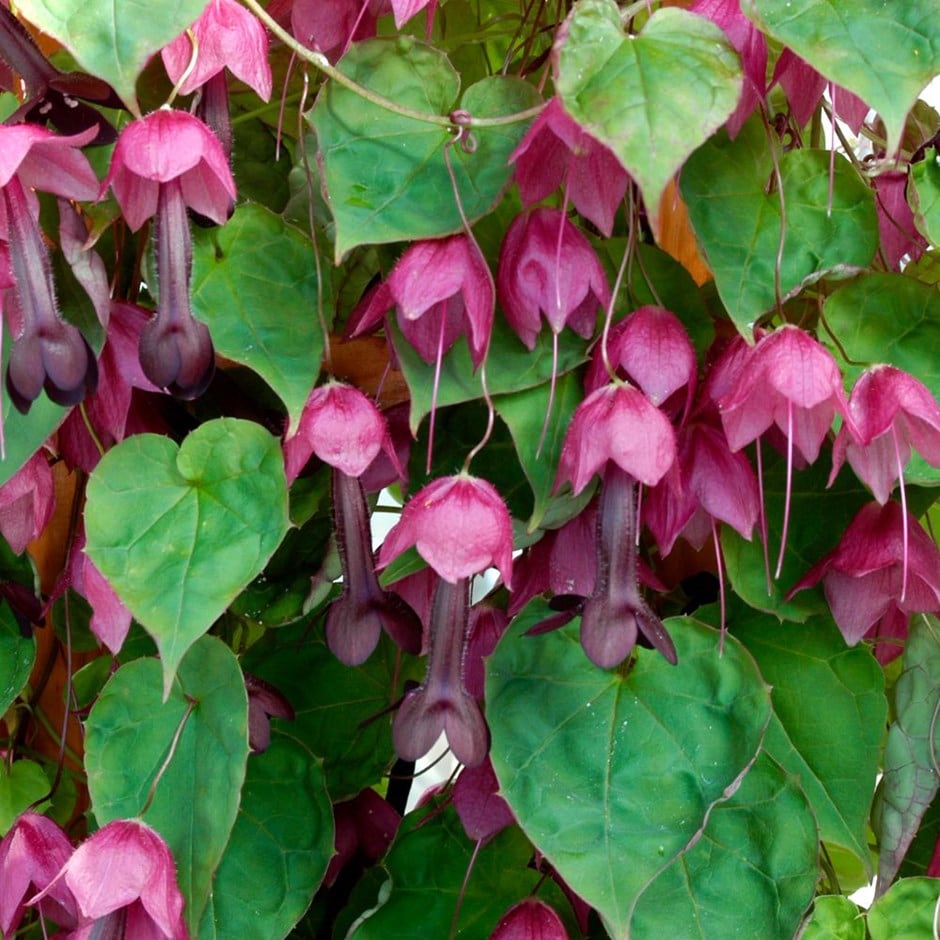
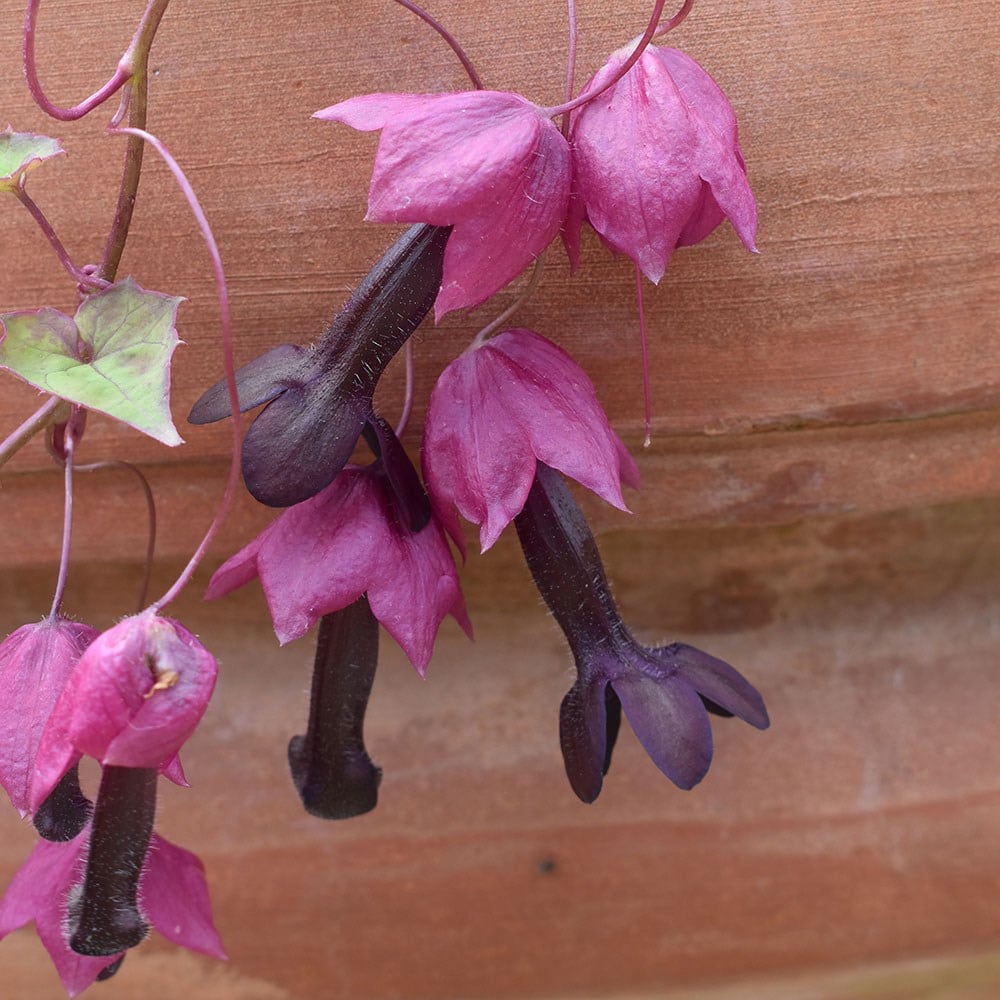
Rhodochiton atrosanguineus
purple bell vine

- approx 10 seeds
- £3.99
- In stock (delivery within 2-3 working days)
Delivery options
- Seed Packets (only) £2.99
- Position: full sun
- Soil: moderately fertile, moist but well-drained soil
- Rate of growth: average
- Flowering period: July to October
- Hardiness: half hardy
The purple bell vine has delightful rose-red calyces with eye-catching, pendulous tubular dark purple flowers hanging beneath like bell clappers. Usually grown as an annual, Rhodochiton atrosanguineus is a beautiful perennial vine has heart-shaped leaves and is a charming addition to summer planting schemes or as a potted feature plant in a conservatory.
Purple bell vine grows best in a warm, sunny or lightly shaded spot with free-draining soil, and it’s usually planted out after frost or grown in containers that can be sheltered. Plant it at the same depth as it was in its pot and provide a trellis, obelisk or netting straight away, as it climbs quickly. Keep the soil evenly moist but not soggy, feeding every couple of weeks with a balanced liquid fertiliser once it starts to grow strongly.
Remove faded flowers to keep it blooming and pinch back any overly long or tangled stems to encourage a fuller plant. In cooler areas, treat it as a tender annual, but container plants can be overwintered under cover in a bright, frost-free place with reduced watering.
Remove faded flowers to keep it blooming and pinch back any overly long or tangled stems to encourage a fuller plant. In cooler areas, treat it as a tender annual, but container plants can be overwintered under cover in a bright, frost-free place with reduced watering.
Sow thinly in trays of seed compost, cover lightly with sieved compost, firm gently and keep moist. Cover with glass, polythene or propagator lid. Keep at approx. 15-20°C (59°F to 68°F), germination may be slow and erratic. Seedlings typically appear after 14-42 days. Remove cover when seedlings appear and when large enough, transplant to individual 7.5cm or 9cm pots. Stand seedlings outside for a few days late May to acclimatise (avoiding frosts). Transplant 60cm apart in flowering position.
Goes well with
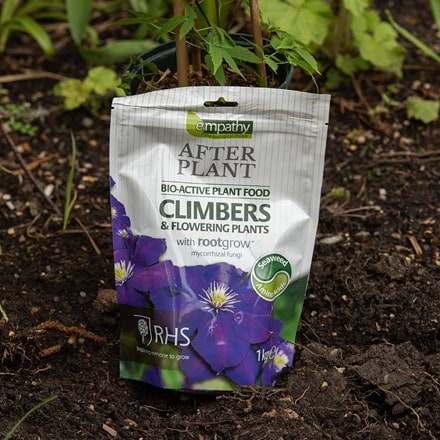
Empathy RHS after plant climbers & flowering plant food with rootgrow
1kg
£7.99
In stock (delivery within 2-3 working days)
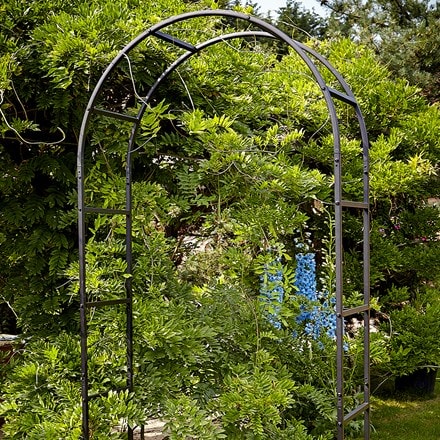
Classic steel garden arch - black
W110cm × D40cm × H228cm
£129.99
In stock (delivery within 2-3 working days)