Magnolia liliiflora 'Nigra'
black lily magnolia

- 2 litre pot | 30cm tall
- £49.99
- In stock (shipped within 2-3 working days)
- 5 litre pot | 50 - 70cm tall
- £69.99
- In stock (shipped within 2-3 working days)
Delivery options
- Standard £5.99
- Position: full sun or partial shade
- Soil: moist, well-drained, slightly acidic soil
- Rate of growth: slow
- Flowering period: June to September
- Hardiness: fully hardy
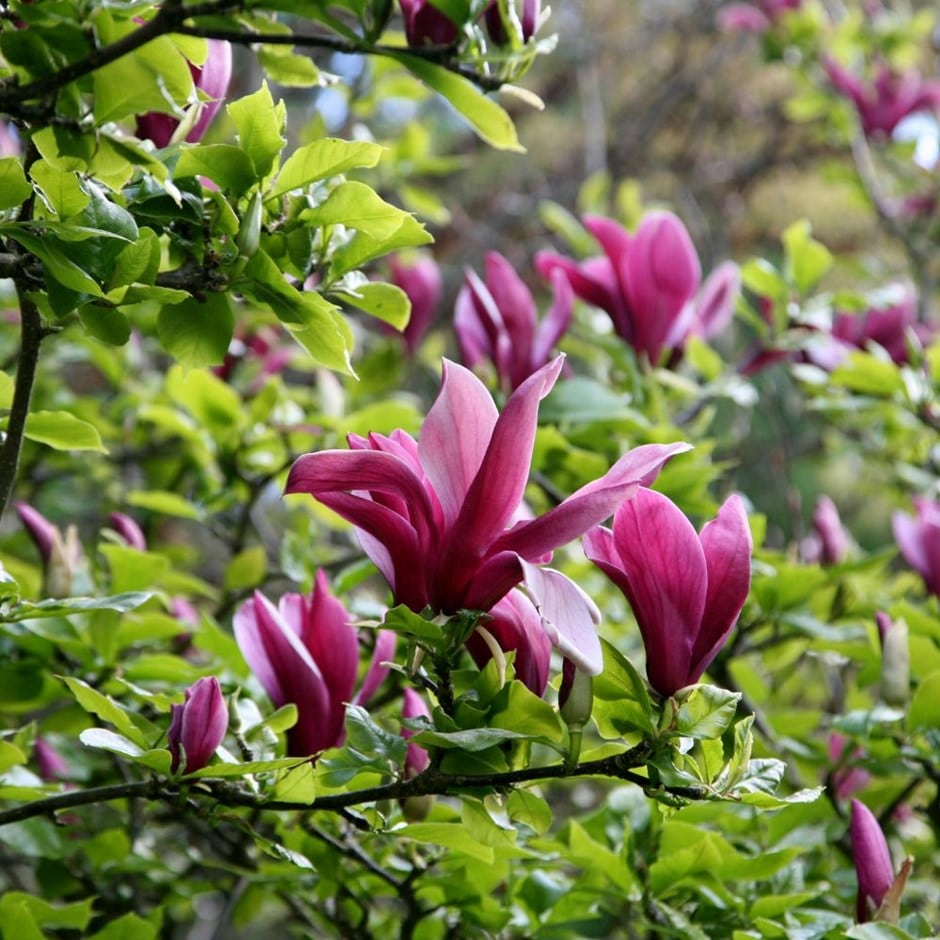
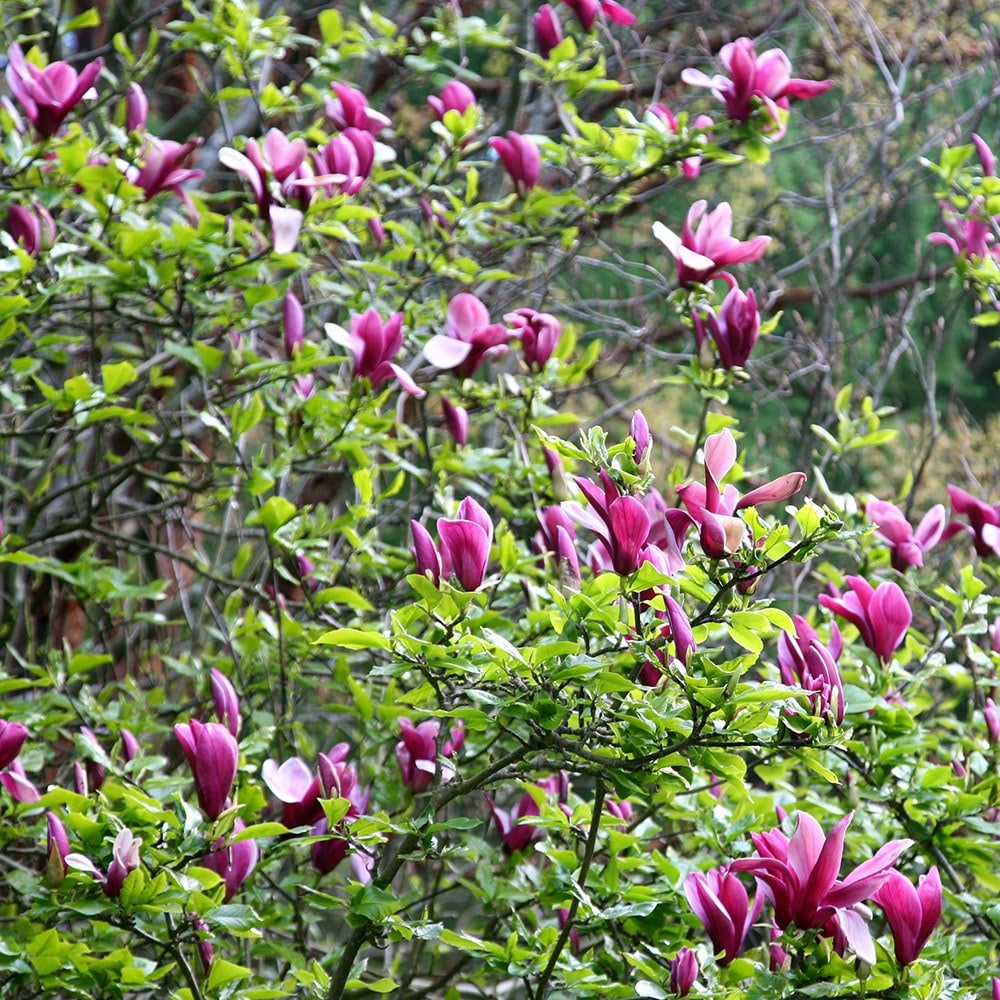
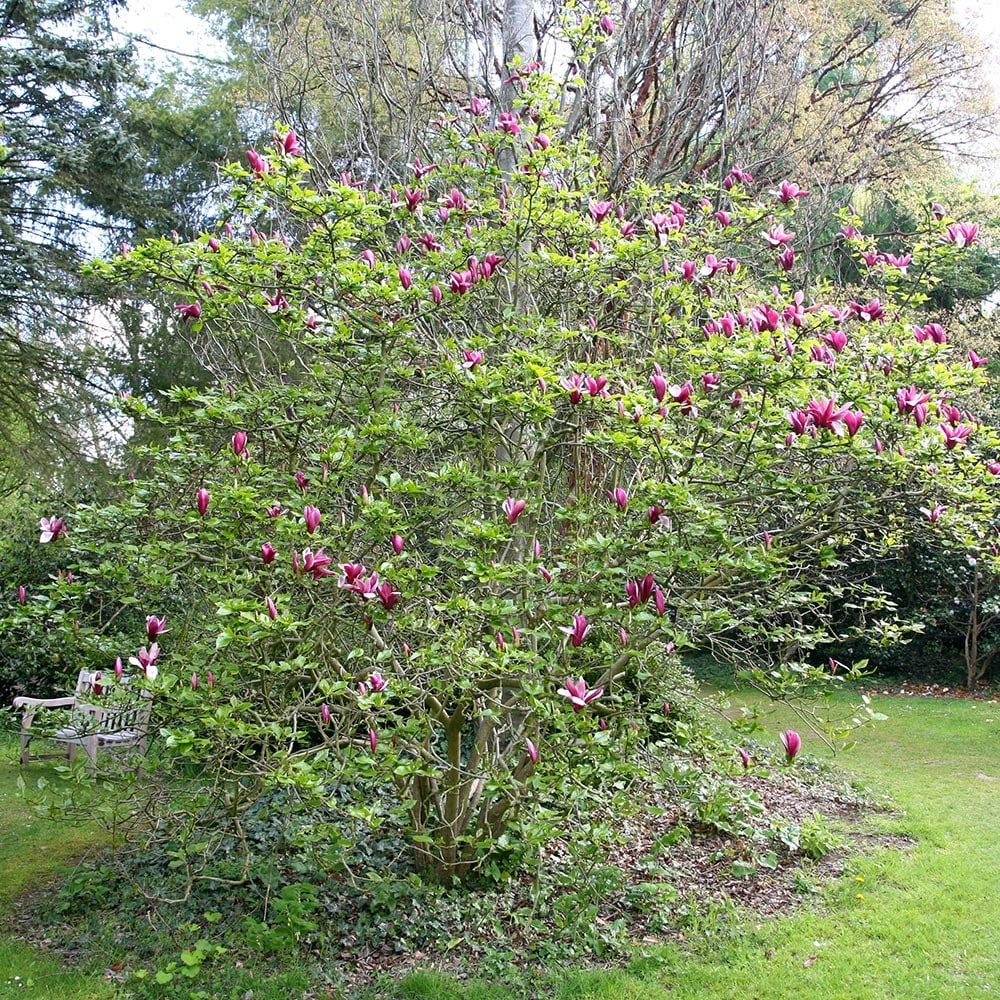
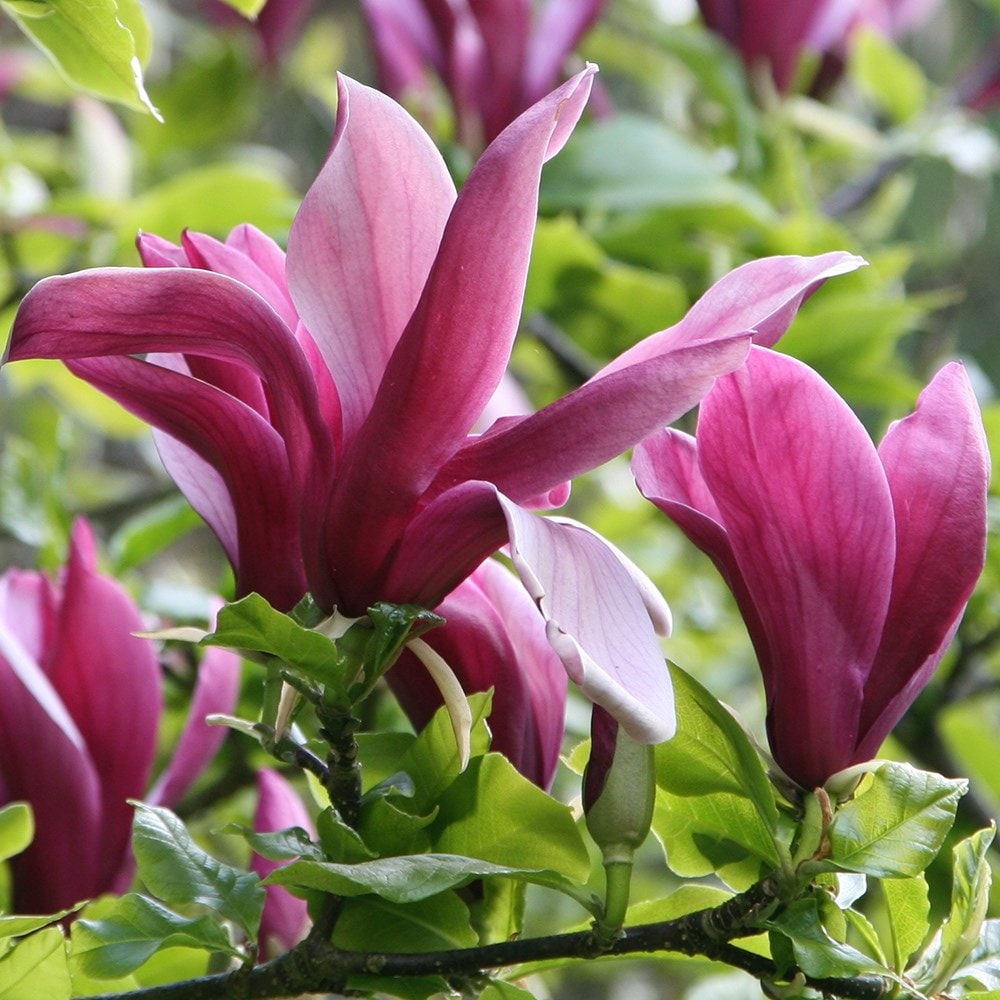
A stunning, deciduous magnolia with a compact habit and dark purple-red flowers which appear from an earlier age than most magnolias. The goblet-shaped blooms are produced from early summer, and then intermittently into autumn. A lovely shrub for a sunny or partially shaded spot out of strong winds.
Choose a sheltered position away from strong winds. Work plenty of ericaceous compost into the planting hole to create the right soil conditions and water well after planting. Magnolias prefer neutral to acidic, moisture-retentive but free-draining soils, so avoid very chalky ground unless improved with organic matter.
These shrubs and small trees need very little pruning. Only remove broken, diseased, or crossing branches, ideally in midsummer once flowering has finished. Heavy pruning is not recommended as it can spoil the natural shape and reduce future flowering.
Apply a mulch of leafmould or well-rotted manure in spring to help conserve soil moisture, especially on lighter soils. Water newly planted specimens regularly during dry periods, as magnolias dislike drying out. Once established, they need little attention beyond occasional feeding with an ericaceous fertiliser in spring to support healthy growth and abundant blooms.
These shrubs and small trees need very little pruning. Only remove broken, diseased, or crossing branches, ideally in midsummer once flowering has finished. Heavy pruning is not recommended as it can spoil the natural shape and reduce future flowering.
Apply a mulch of leafmould or well-rotted manure in spring to help conserve soil moisture, especially on lighter soils. Water newly planted specimens regularly during dry periods, as magnolias dislike drying out. Once established, they need little attention beyond occasional feeding with an ericaceous fertiliser in spring to support healthy growth and abundant blooms.