Salvia guaranitica 'Black and Blue'
sage

- 9cm pot
- £9.99
- In stock (delivery within 2-3 working days)
- 3 × 9cm pots
- £22.99 £7.66 each
- In stock (delivery within 2-3 working days)
- 6 × 9cm pots
- £39.99 £6.67 each
- In stock (delivery within 2-3 working days)
- 2 litre pot
- £17.99
- In stock (delivery within 2-3 working days)
- 3 × 2 litre pots
- £42.99 £14.33 each
- In stock (delivery within 2-3 working days)
Delivery options
- Standard £5.99
- Position: full sun
- Soil: moderately fertile, moist but well-drained soil
- Rate of growth: fast
- Flowering period: August to October
- Hardiness: half hardy (will need winter protection)
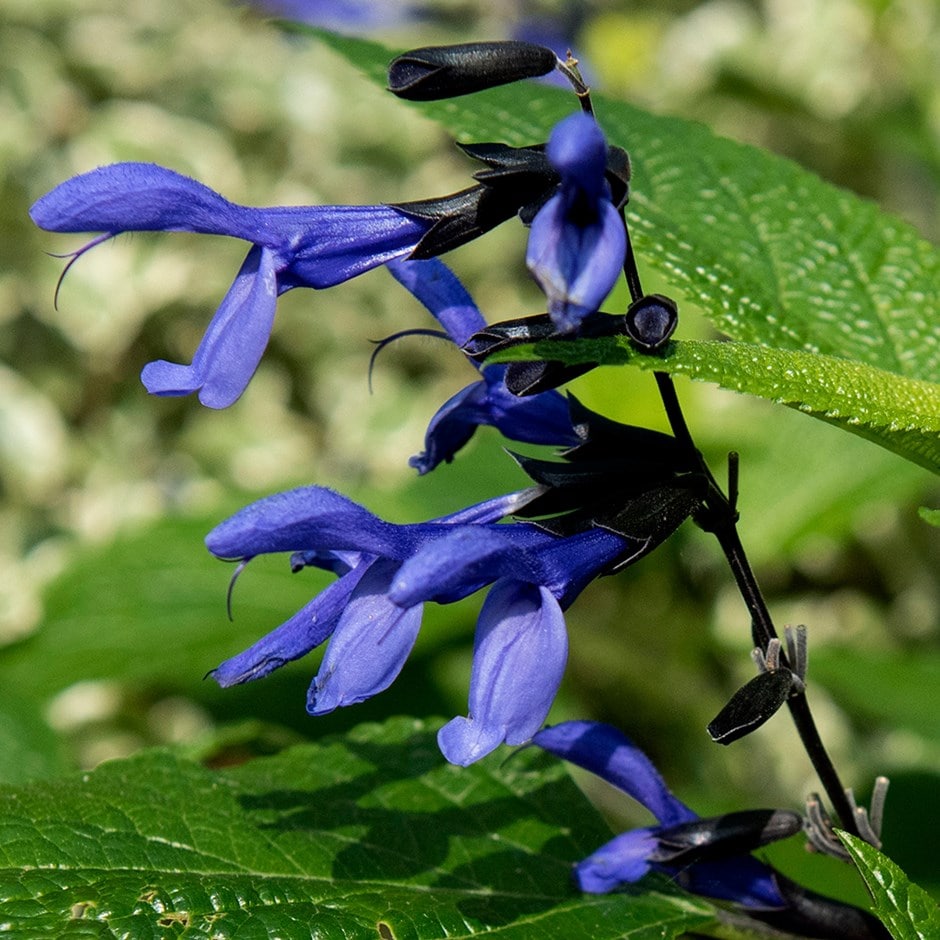
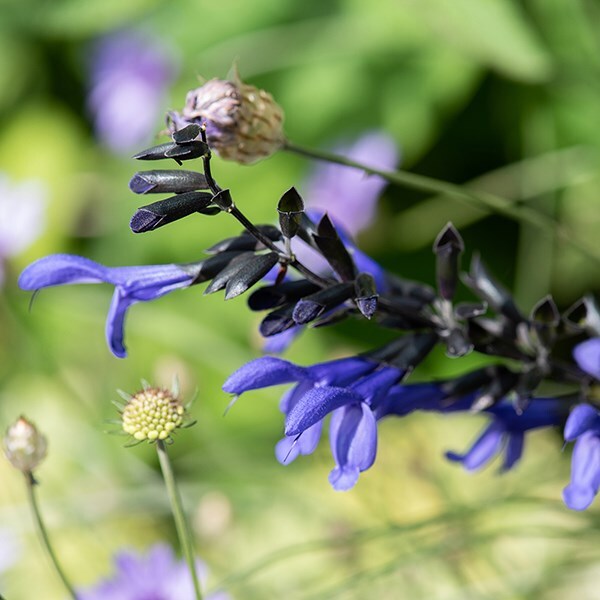
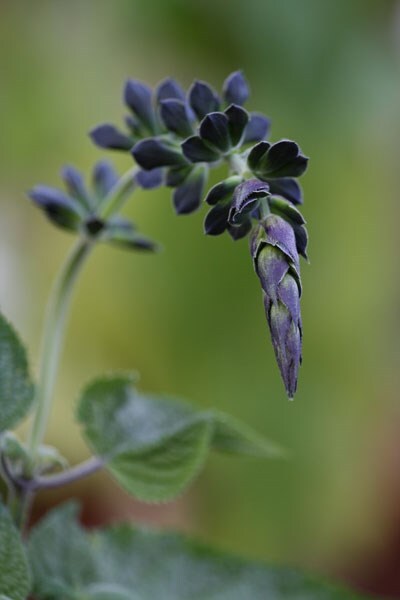
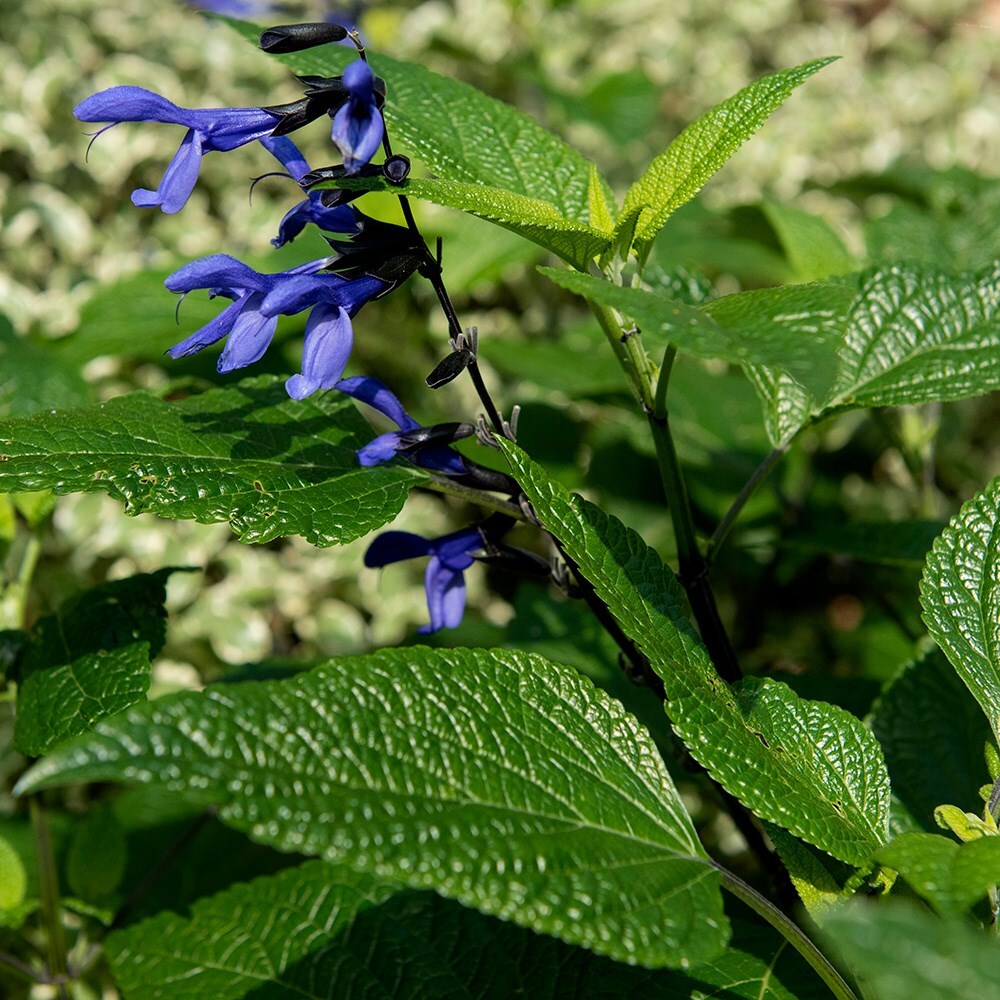
This head-turning perennial offers both stature and sumptuous colour. It's an impressive sight in late summer and autumn when the dark, 30cm long spikes appear, each threaded with rich purple-blue flowers that are held at their bases by near-black calyces. 'Black and Blue' is a vigorous plant, but it's not fully hardy, so if possible place it near a south facing wall where it will flourish in its reflected warmth and shelter.
When planting, incorporate compost to improve drainage and fertility, spacing plants 30-45cm (12-18in) apart and watering thoroughly.
To keep the plant blooming throughout the season, promptly remove flower spikes as soon as they begin to fade - this deadheading encourages the plant to produce more flowers rather than putting energy into seed production.
In early spring, apply a generous 5-7cm (2-3in) mulch of well-rotted garden compost or manure around the base of the plant to retain moisture, suppress weeds, and provide essential nutrients as it breaks down. Ensure the mulch is spread evenly, but keep it away from the stems to prevent rot. A supplementary granular fertiliser (such as the mineral based Growmore) is advised in the early part of the season, once the plant begins to sprout.
Regular watering, particularly in dry spells, will help maintain healthy growth, but be careful not to waterlog the soil, as this salvia prefers well-drained conditions.
Finally, consider providing some protection in exposed or colder regions of the UK by covering with a double layer of horticultural fleece or dry mulch (bark chippings/ composted pine needles) to insulate the roots, or by using a cloche to protect the plant against hard frosts.
To keep the plant blooming throughout the season, promptly remove flower spikes as soon as they begin to fade - this deadheading encourages the plant to produce more flowers rather than putting energy into seed production.
In early spring, apply a generous 5-7cm (2-3in) mulch of well-rotted garden compost or manure around the base of the plant to retain moisture, suppress weeds, and provide essential nutrients as it breaks down. Ensure the mulch is spread evenly, but keep it away from the stems to prevent rot. A supplementary granular fertiliser (such as the mineral based Growmore) is advised in the early part of the season, once the plant begins to sprout.
Regular watering, particularly in dry spells, will help maintain healthy growth, but be careful not to waterlog the soil, as this salvia prefers well-drained conditions.
Finally, consider providing some protection in exposed or colder regions of the UK by covering with a double layer of horticultural fleece or dry mulch (bark chippings/ composted pine needles) to insulate the roots, or by using a cloche to protect the plant against hard frosts.