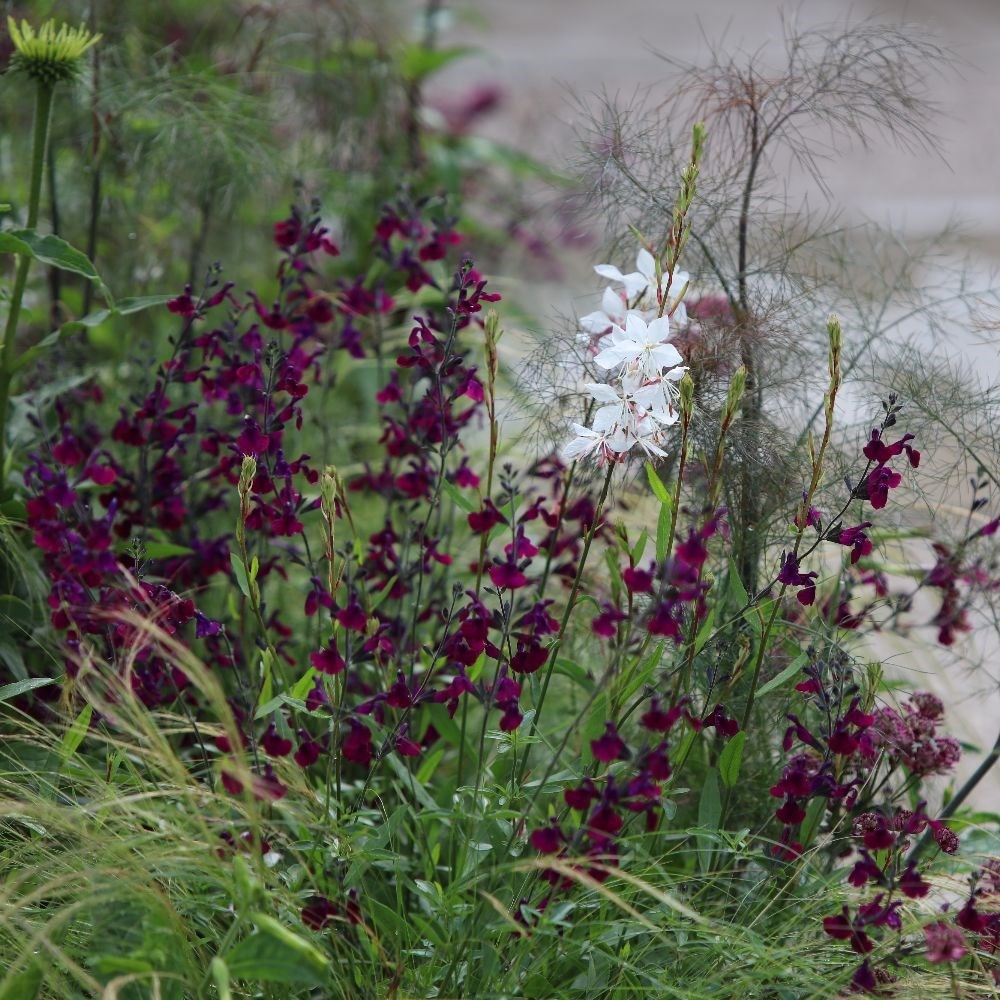

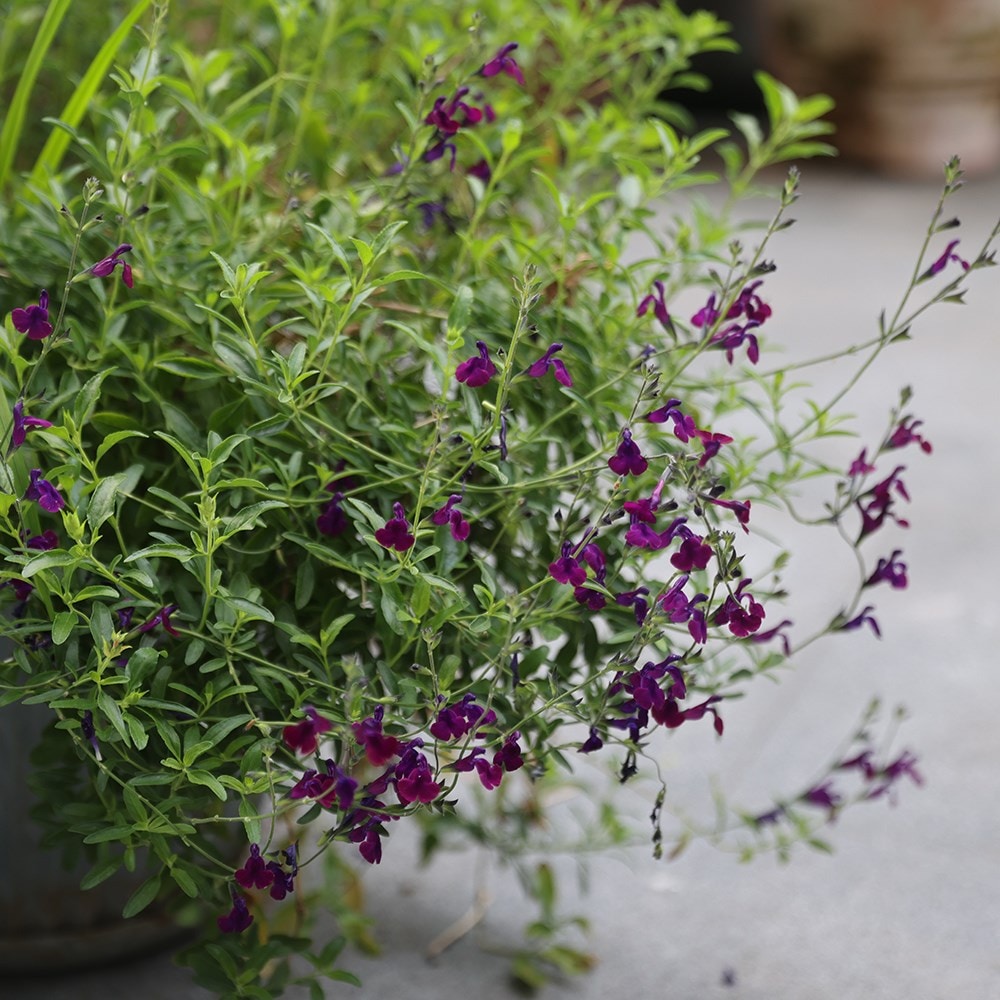

Salvia 'Nachtvlinder'
salvia


- 9cm pot
- £10.99
- In stock (delivery within 2-3 working days)
- 3 × 9cm pots
- £24.99 £8.33 each
- In stock (delivery within 2-3 working days)
- 6 × 9cm pots
- £39.99 £6.67 each
- In stock (delivery within 2-3 working days)
- 2 litre pot
- £15.97 £18.79
- In stock (delivery within 2-3 working days)
- 3 × 2 litre pots
- £38.24 £44.99 £12.75 each
- In stock (delivery within 2-3 working days)
Delivery options
- Standard £5.99
- Position: full sun
- Soil: moderatley fertile, moist but well-drained soil
- Rate of growth: average
- Flowering period: June to August
- Hardiness: frost hardy (may need winter protection)
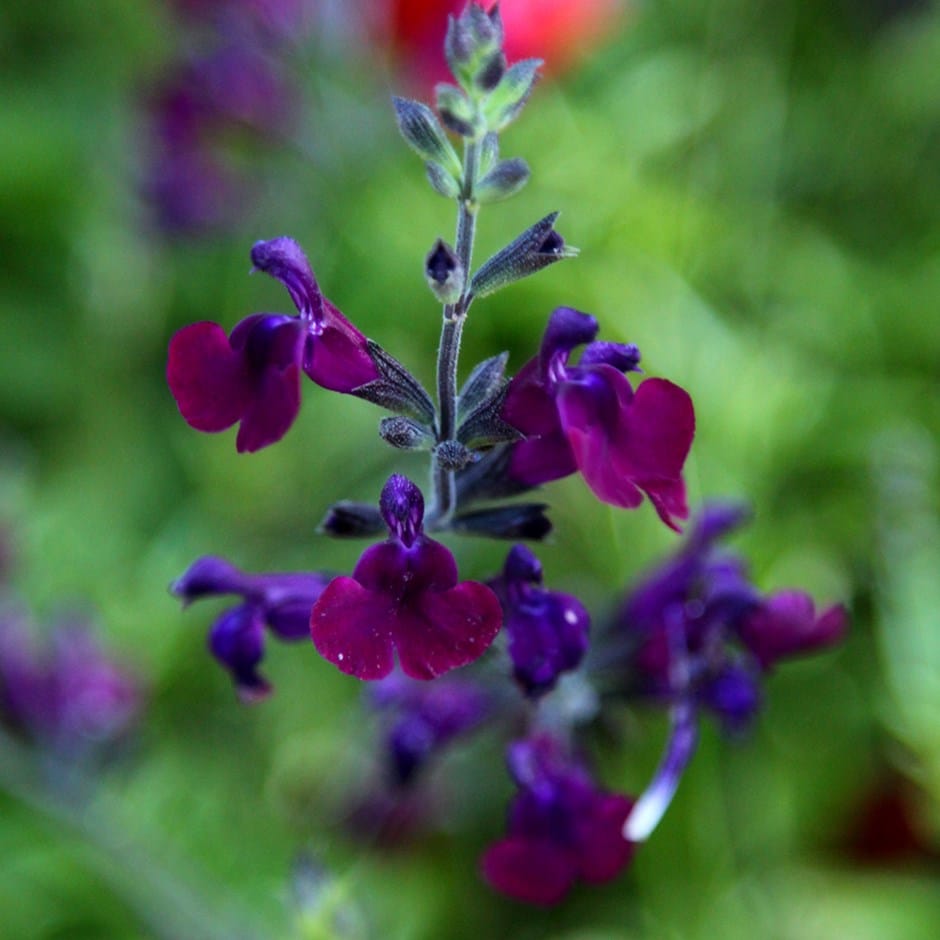
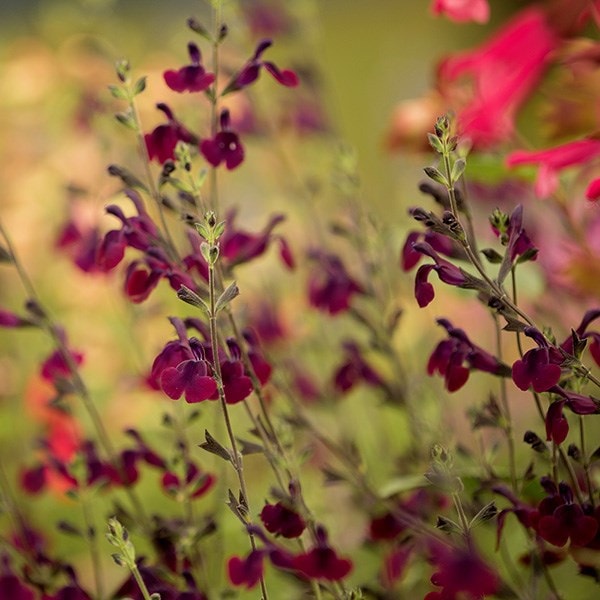
Dark plum-purple flowers with a velvety texture bloom from late spring into autumn, attracting bees and other pollinators. This compact, bushy shrub has aromatic mid-green leaves that release a sweet, blackcurrant-like scent when brushed against.
Drought tolerant once established, it thrives in freely draining soil and benefits from a sheltered, sunny position. Regular deadheading encourages continuous flowering, while pruning in spring helps maintain its shape.
Salvia ‘Nachtvlinder’, meaning "night moth" in Dutch, is a magnet for wildlife and has earned the RHS Award of Garden Merit for its reliability and performance. Ideal for borders, containers, or gravel gardens.
Drought tolerant once established, it thrives in freely draining soil and benefits from a sheltered, sunny position. Regular deadheading encourages continuous flowering, while pruning in spring helps maintain its shape.
Salvia ‘Nachtvlinder’, meaning "night moth" in Dutch, is a magnet for wildlife and has earned the RHS Award of Garden Merit for its reliability and performance. Ideal for borders, containers, or gravel gardens.
When planting, improve drainage by incorporating compost and adding horticultural grit or sand to heavier soils. Space plants 30-45cm (12-18in) apart and water thoroughly.
Deadhead spent flower spikes promptly to encourage continuous blooming. Apply a 5-7cm (2-3in) mulch of composted bark or gravel in early spring to retain moisture and suppress weeds, but avoid manure-based mulches, which can be too rich.
Feed with a high-potash fertiliser, such as tomato feed, once growth resumes in spring to promote flowering. Water regularly during dry spells but ensure the soil remains well-drained to prevent root rot.
In colder regions, it may die back, so provide winter protection by applying a dry mulch around the base or lifting and potting up plants to overwinter in a frost-free location.
Deadhead spent flower spikes promptly to encourage continuous blooming. Apply a 5-7cm (2-3in) mulch of composted bark or gravel in early spring to retain moisture and suppress weeds, but avoid manure-based mulches, which can be too rich.
Feed with a high-potash fertiliser, such as tomato feed, once growth resumes in spring to promote flowering. Water regularly during dry spells but ensure the soil remains well-drained to prevent root rot.
In colder regions, it may die back, so provide winter protection by applying a dry mulch around the base or lifting and potting up plants to overwinter in a frost-free location.
Goes well with


Pinpoint rotational planter for young plants/bulbs - Crocus by DeWit
small
£49.99
In stock (delivery within 2-3 working days)
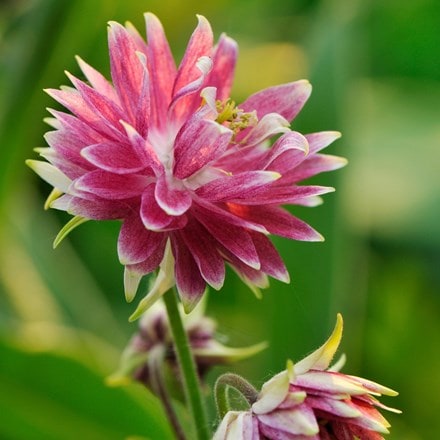
Aquilegia vulgaris var. stellata Nora Barlow (Barlow Series)
9cm pot
£9.99
In stock (delivery within 2-3 working days)