Thymus 'Thyme of Provence'
thyme

- approx 6000 seeds
- £2.71 £3.19
- In stock (delivery within 2-3 working days)
Delivery options
- Seed Packets (only) £2.99
- Position: full sun
- Soil: moderately fertile, moist, well-drained soil
- Rate of growth: average
- Flowering: May to July
- Hardiness: fully hardy
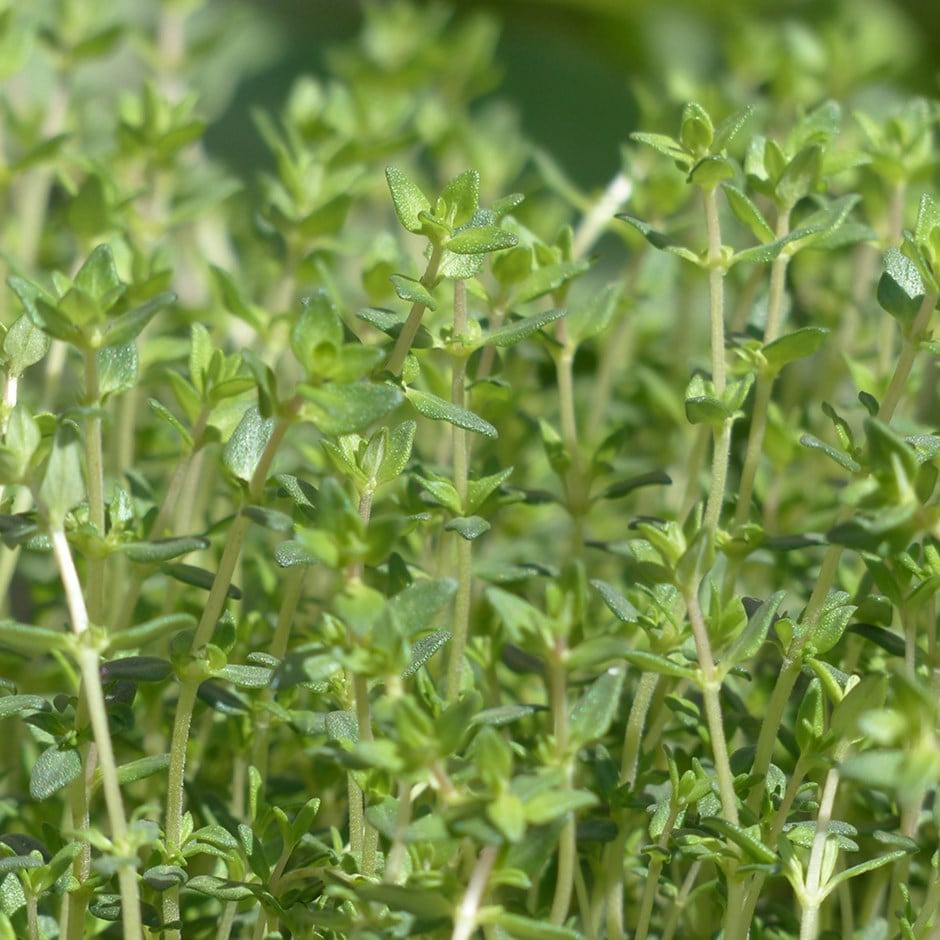
‘Thyme de Provence’ is a popular culinary herb prized for its distinct spicy flavour. This bushy, dwarf perennial has tiny soft grey-green leaves and pale pink summer flowers, and is a key ingredient in Herbes de Provence and Bouquet Garni. Compared to common thyme, this variety has a more robust, complex flavour, and the narrow delicate leaves retain their aromatic oils well for seasoning savoury dishes. As an edible ornamental, this wonderfully versatile plant makes a pretty, low-maintenance addition to herb gardens and containers, loved by bees and other pollinators.
Thyme thrives in full sun and well-drained, light, or sandy soil, making it ideal for rockeries, gravel gardens, and containers using loam based composts. It dislikes heavy, wet conditions, so improve drainage with grit or sand if necessary.
Once established, it is drought-tolerant and requires minimal watering, as excess moisture can lead to root rot.
Lightly trim after flowering to remove dead blooms and encourage bushy growth, cutting back harder if needed to maintain a compact shape. Avoid overfeeding, as rich soil or excessive fertiliser can lead to leggy growth with reduced flavour and fragrance.
Most species are hardy but may struggle in prolonged wet or cold conditions, so ensure good drainage or provide winter protection in exposed areas. It is generally pest-free, but good air circulation helps prevent fungal issues.
Once established, it is drought-tolerant and requires minimal watering, as excess moisture can lead to root rot.
Lightly trim after flowering to remove dead blooms and encourage bushy growth, cutting back harder if needed to maintain a compact shape. Avoid overfeeding, as rich soil or excessive fertiliser can lead to leggy growth with reduced flavour and fragrance.
Most species are hardy but may struggle in prolonged wet or cold conditions, so ensure good drainage or provide winter protection in exposed areas. It is generally pest-free, but good air circulation helps prevent fungal issues.
Surface-sow in pots or trays filled with barely moist seed compost and cover with a sprinkling of finely sieved compost. Place in a propagator at 15-20°C (60-70°F) until germination, which usually takes up to 24 days.
Pot on when large enough to handle and harden off before planting at 25cm (10in) intervals outside in late spring or early summer. Keep plants well trimmed to allow the new growth (which has the best flavour) to come through.
Pot on when large enough to handle and harden off before planting at 25cm (10in) intervals outside in late spring or early summer. Keep plants well trimmed to allow the new growth (which has the best flavour) to come through.