Clematis 'Yukiokoshi'
clematis (group 2)

- 2 litre pot | 60cm cane
- £21.24 £24.99
- available to order from summer
Delivery options
- Standard £5.99
- Position: full sun or partial shade
- Soil: fertile, moist but well-drained soil, or loam-based compost for containers
- Rate of growth: average
- Flowering period: May to June and August
- Hardiness: fully hardy
Unusual, ruffled blooms give this climber a slightly wild, almost hand-torn look. Clematis ‘Yukiokoshi’ produces large, multi-layered white flowers with softly irregular, fringed petals, often marked with a hint of pale green in the early flush. The effect is full and textured rather than neat, bringing a more relaxed, natural feel to walls, trellises or obelisks.
Flowering begins in late spring on established growth, with a second, lighter display later in the season, helping to extend interest with light pruning after the first flush. It’s a vigorous grower, ideal for adding height and softening vertical spaces.
Plant in sun or light shade with cool, shaded roots, and give it support to climb, or weave through taller shrubs for something a bit different.
Flowering begins in late spring on established growth, with a second, lighter display later in the season, helping to extend interest with light pruning after the first flush. It’s a vigorous grower, ideal for adding height and softening vertical spaces.
Plant in sun or light shade with cool, shaded roots, and give it support to climb, or weave through taller shrubs for something a bit different.
To avoid dry conditions, and to ensure good soil contact around the rootball, we advise planting climbers at least 30cm (12in), and preferably 45-60cm (18-24in) away from the base of a wall or fence. An even larger distance should be maintained when planting climbers beside an existing tree or shrub.
Clematis are happiest when their roots are kept cool and moist, so try to plant them where the base of the plants will be lightly shaded by other, lower-growing species. Otherwise, use a clematis root protector, or top-dress the rootball (avoiding the immediate crown), with a generous layer of shingle or pebbles.
Remove dead and damaged stems before growth begins in early spring, cutting all remaining stems back to where strong buds are visible.
Apply a slow-release balanced fertiliser and a mulch of well-rotted garden compost around the base of the plant - again avoiding the immediate crown.
Clematis are happiest when their roots are kept cool and moist, so try to plant them where the base of the plants will be lightly shaded by other, lower-growing species. Otherwise, use a clematis root protector, or top-dress the rootball (avoiding the immediate crown), with a generous layer of shingle or pebbles.
Remove dead and damaged stems before growth begins in early spring, cutting all remaining stems back to where strong buds are visible.
Apply a slow-release balanced fertiliser and a mulch of well-rotted garden compost around the base of the plant - again avoiding the immediate crown.
- Humans: Skin irritant; Pets: Harmful if eaten
Goes well with
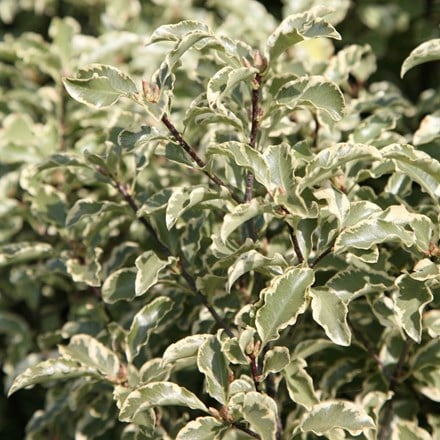
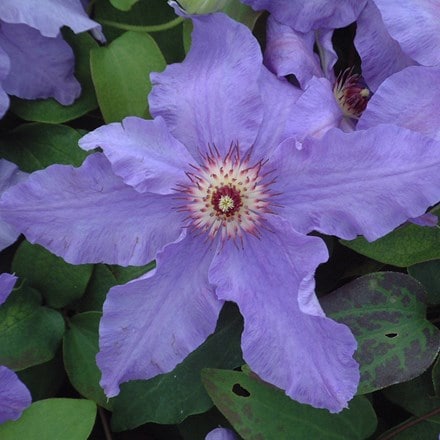
Clematis Happy Anniversary
3 litre pot | 60cm cane
£25.49
In stock (delivery within 2-3 working days)
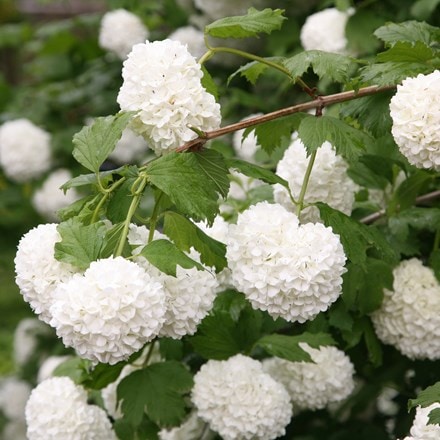
Viburnum opulus Roseum
12 litre pot | 0.8 - 1m tall
£89.99
In stock (delivery within 2-3 working days)